Waterproof mattress protector – a buyer’s guide to protecting your mattress in everyday life
A mattress is one of the most valuable “invisible” purchases in many homes. When moisture is allowed to soak into it, the damage may not be visible immediately, but odours, stains and moisture left in the structure can ruin a mattress surprisingly quickly.
A waterproof mattress protector is everyday insurance: it handles spills, bedwetting, perspiration and small pet accidents, and the protector can be machine-washed. The mattress stays drier and cleaner, while bed hygiene is easier to keep under control.
Why it is worth protecting your mattress from the very beginning
Mattress covers and padding are usually made from materials that absorb liquid and dry slowly. When moisture remains in the layers, there is a risk of set-in stains, odours and an unpleasant feeling while sleeping. Several expert sources emphasise the same basic idea: moisture getting into a mattress can damage it permanently and increase the risk of microbial growth, making a protective layer a sensible part of bed hygiene (Sleep Foundation: https://www.sleepfoundation.org/best-mattress-protectors/best-mattress-protector-for-bedwetting).
For families with children, the need is often obvious, as bedwetting is quite common among young children. A protector also helps when illness brings drinks, medicines or other spills into bed, or when occasional guests sleep on the mattress.
And sometimes the reason is simply everyday life: morning coffee in bed.
What “waterproof” actually means in a mattress protector
Waterproofing is almost always created by a membrane or coating attached to the surface fabric. The most common solution seen in consumer products is a PU or TPU membrane (polyurethane/thermoplastic polyurethane). It can be made microporous so that it blocks liquid while allowing water vapour through. This is the combination many people look for: the mattress does not get wet, but the sleeper does not feel as though they are lying “on plastic”.
Some products also use denser plastic films (PVC/PE). They reliably keep water out, but the feel may be stiffer and breathability lower. This type of solution is more commonly chosen for situations where protection matters more than comfort.
The principle of breathability is the same as in technical outdoor clothing: a water droplet is too large to pass through, but moisture can escape. In manufacturers’ terms, this often appears as “breathable”, “microporous” or “TPU membrane” (Protect-A-Bed describes a similar membrane concept in connection with its technology: https://www.protect-a-bed.co.za/miracle-membrane/).
Types of design: fitted sheet, corner protector or zippered encasement
The type of protector you choose affects both ease of use and the level of protection.
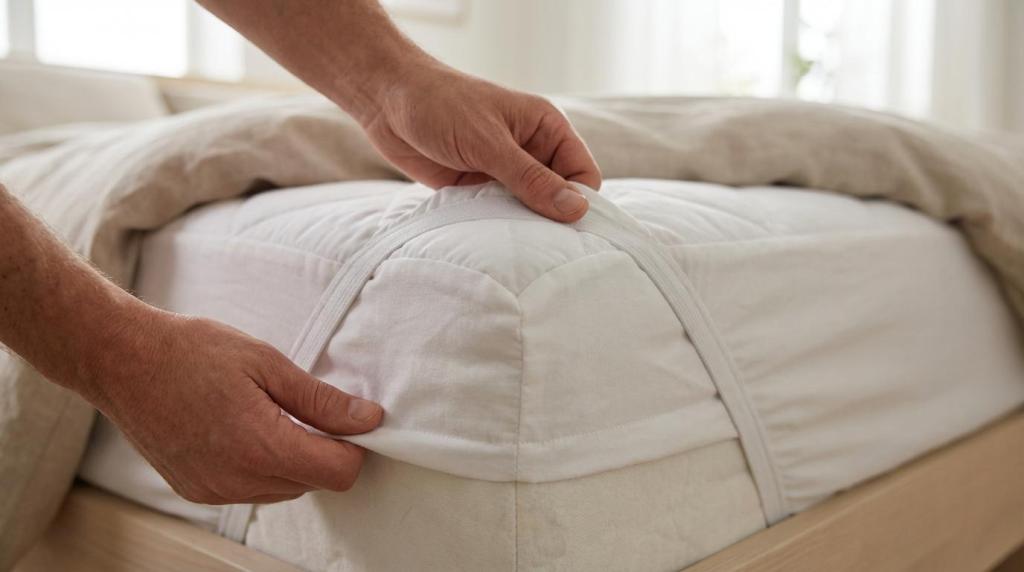
A model secured at the corners with elastic is quick to fit: it is placed over the mattress like a fitted sheet. It is well suited to ordinary home use when protecting the top surface of the mattress is most important.
A zippered “encasement” covers the mattress on all sides. This type of model appeals for allergy use, pet households and when you want to protect the sides of the mattress from dust and dirt as well. The downside is that removing it and putting it back on takes a little more time.
A quilted surface fabric adds softness and can reduce the feel of the membrane, but it also increases layer thickness and drying time after washing. A thin, smooth surface fabric often dries faster.
Materials and feel: what matters in everyday use
The waterproof membrane is only one part of the whole. The sleeper comes into contact with the surface fabric.
A cotton surface feels the most “bed-like” to many people: it breathes and feels natural. Bamboo viscose and Tencel-type cellulosic fibres may feel cooler and smoother. Microfibre surfaces, in turn, are often quiet and soft, making them popular when you want to reduce rustling.
Many people are surprised that sound is a selection criterion. The cheapest waterproof option may work perfectly well, but if it rustles with every turn, the protector can easily end up in the cupboard.
Below is a concise comparison you can use when browsing product information in a shop or online store.
|
Surface material + membrane |
Feel and sound |
Breathability |
Everyday washing |
Often best suited for |
|---|---|---|---|---|
|
Cotton + PU/TPU |
Natural, usually quiet |
Good |
Easy, dries reasonably well |
Families, general use |
|
Bamboo viscose/Tencel + TPU |
Smooth, often cool and quiet |
Good |
May require gentler care |
Those who perspire, people with sensitive skin |
|
Microfibre + TPU |
Soft, typically quiet |
Good |
Often quick-drying |
When you want an “unnoticeable” protector |
|
Dense plastic film (PVC/PE) |
Plastic-like, may rustle |
Lower |
Very easy to wipe clean |
For demanding protection needs, temporary use |
Size and fit: where many people make a mistake
A mattress protector does not work properly if it comes up at the corners or is too tight. That is why the most important measurement is not only the width and length, but also the mattress height.
If you have a thick spring mattress, continental bed or a mattress topper on top, check the total height. Many protectors state a suitable mattress-height range (such as 20–35 cm). This should not be overlooked.
Once you have measured your mattress, use this checklist when reading the product card:
- Dimensions: width x length and mattress height (pocket depth)
- Fastening: elasticated edge or zippered 360° protection
- Waterproof layer: PU/TPU membrane and a mention of breathability
- Care instructions: temperature, tumble drying, no bleaching
- Surface fabric: cotton, bamboo viscose, microfibre, blend
One practical tip: if you are between two sizes and your mattress is tall, choose the one with the more generous pocket depth. A protector that is too small will start to roll up.
Which mattress protector is suitable for whom
Often, the best choice is found by considering the risk and washing frequency, not just “comfort”.
At home, these profiles often recur:
- Family with children
- Pet household
- Allergy household
- Guest room and holiday home
- Those who perspire or sleep hot
When you recognise your own situation, choosing the construction also becomes easier: a zippered encasement brings peace of mind when exposure is frequent. A thin corner protector is sufficient when you want neat basic protection from everyday spills.
Washing and care: how to maintain waterproofing
A waterproof mattress protector is designed to be washed, but it does not tolerate everything. Washing at too high a temperature, vigorous spinning or high tumble-dryer heat can weaken the membrane over time if the manufacturer has not approved them.
Many people manage well with a good routine: wash every 1–2 months, and immediately if an accident happens. If there is bedwetting in the household or a pet sleeps in the bed, the protector may need washing weekly, in which case it is worth investing in a model made to withstand repeated washing.
Keep these basics in mind:
- Follow the temperature permitted by the manufacturer
- Avoid fabric softeners, as they can impair the membrane’s performance
- Dry thoroughly before putting it back on, so moisture does not remain in the layers
A mattress protector does not replace washing your sheets; it is used underneath the sheet.
Safety and certifications: what they can tell you
When a product is close to the skin and used every night, material safety matters to many people. OEKO-TEX® Standard 100 is a common certification indicating that a textile has been tested for harmful substances. It does not automatically make a product the “most ecological” option, but it is a practical way to rule out unpleasant surprises.
Odour is another subject that comes up surprisingly often. A new protector may have a slight factory smell when removed from its packaging, especially if the membrane is dense. It often disappears with airing or after one wash. If the odour is strong and persistent, it may be worth considering a different material.
Buying online: what to look at beyond the product card
When buying online, it is easy to compare only price and size. Yet the things that often make everyday life easier are the “shopping” details: delivery, returns and accessibility if the size turns out to be wrong.
There are major differences in return terms between Finnish online stores. Many people value flexibility because estimating mattress height goes wrong surprisingly often. The Finnmart.eu online store states that it offers a 14-day EU right of withdrawal, insured delivery with reliable carriers, and fast customer service also via WhatsApp. Such practices lower the threshold for ordering two options and keeping the one that fits best.
In addition to technical details, look for one thing on the product card: whether the protector is intended for a mattress topper or the actual mattress. The sizes may be the same, but the thickness and stretch differ.
Quick selection guide: three questions before buying
When there are many options, the decision often comes down to a few questions. The more risk and washing involved, the more it is worth prioritising durability and a proper membrane. The more sensitive the sleeper, the more it is worth prioritising the surface fabric and quietness.
If you want to narrow down the decision quickly, ask yourself:
- Am I protecting against occasional spills or repeated accidents?
- Does someone with sensitive skin, allergies or a tendency to sleep hot sleep in the bed?
- How often am I prepared to wash and dry the protector?
Once these are clear, the right construction and material are usually surprisingly easy to find.
