How often should you change your bed sheets
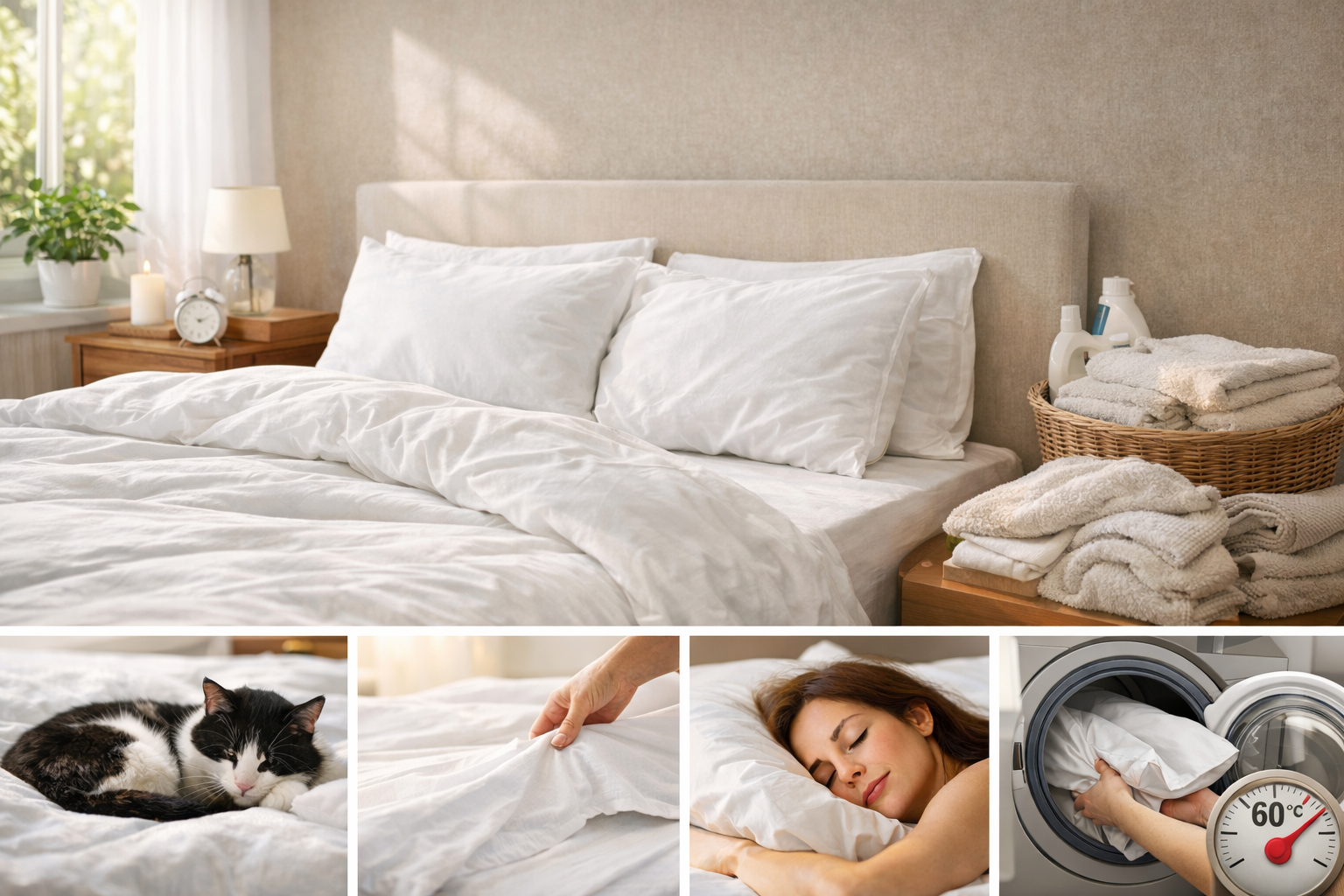
How often you change your bed sheets is a surprisingly practical question: it affects sleep, skin wellbeing, odours and the smoothness of everyday life. Discussions often drift to extremes, either “once a month is enough” or “every other day”, even though a sensible routine is usually based on the everyday life of the person using the bed.
A good rule of thumb is simple: if the bed feels fresh, your skin is doing well and laundry day remains manageable, your routine is probably right. If you wake up feeling stuffy or allergy symptoms increase, it is worth changing them more often.
A week is a good starting point for many
In normal home use, a common recommendation is to wash and change bed sheets about once a week, or at least every 7–10 days. The reason is not only a “feeling of cleanliness”, but concrete biology: during the night, sweat, oils, skin cells and dust accumulate in bedding. They feed odour-causing microbes and provide a favourable environment for dust mites if conditions are humid.
A weekly routine also works well in terms of time management. When sheet-changing day is fixed, laundry does not build up into an unmanageable pile, and you do not have to hunt for clean sets in the cupboard in a hurry.
If you want a clear “minimum limit”, for most people it is this: bed sheets should not be stretched out over periods of several weeks if the same bed is slept in every night and everyday life includes sweating, pets or sensitivities.
When should you change bed sheets more often?
In some situations, a week is too long. It is not about hysteria, but practical hygiene and comfort. If any of the following applies to your everyday life, changing them more frequently will usually make you feel better quickly.
Signs and situations where it makes sense to shorten the interval include:
- A stuffy smell in the bed in the morning
- Night sweats or hot flushes
- A cold, stomach bug or fever
- Atopic skin, asthma or worsening allergy symptoms
- A pet sleeps on top of the duvet or beside the pillow
- Makeup, hair products or strong creams get onto the fabric
When the interval is shorter, for many it is enough to change pillowcases more often than the fitted sheet. It is a small step, but often surprisingly effective for the skin and airways.
Situation-specific recommendations at a glance
The table below brings together practical change intervals. It is not “the one truth”, but a quick way to assess whether you are closer to a 3-day, 7-day or 10-day routine.
|
Situation at home |
Recommended sheet change |
Pillowcase |
Washing note |
|---|---|---|---|
|
Healthy adult, no pet |
7–10 days |
7 days |
Aim for 60 °C if the textile allows it |
|
Heavy sweating, hot periods |
3–4 days |
2–4 days |
60 °C, thorough drying |
|
Allergy or atopic skin |
3–7 days |
3–4 days |
60 °C, avoid strong fragrances |
|
Pet sleeps in the bed |
4–7 days |
3–7 days |
Remove hair before washing, use sufficient heat |
|
Illness (cold, stomach bug) |
as soon as symptoms ease |
immediately |
Wash hot; also change the duvet/pillow protector if in use |
|
Two sleepers in the same bed |
5–7 days |
5–7 days |
Use increases, so the routine often becomes shorter naturally |
Washing temperature matters more than many people realise
The changing interval is only half the picture. The other half is what actually happens in the wash. Many expert recommendations emphasise washing at 60 degrees, as it reduces microbes and allergens more effectively than a cooler wash. However, not all sheets can withstand 60 degrees, so it is worth checking the care label.
If the textile allows 60 °C, it is a good basic setting especially when there are allergies, sweating or illness at home. If the temperature needs to remain at 40 degrees because of the material, it is often wise to shorten the changing interval and ensure that the washing machine is not too full. Laundry does not get cleaner if it “marinates” in an overcrowded drum.
Another everyday detail is drying. Bed sheets should dry properly, preferably quickly. Prolonged damp drying can leave a stuffy smell even if the wash was good.
The pillowcase is skincare's quiet companion
Facial skin is against the pillowcase for hours, transferring both skin oils and residues from hair and skincare products. If you are prone to blemishes, irritation or itching, changing your pillowcase more frequently is often the easiest thing to try.
Many adopt a routine in which the pillowcase is changed twice a week and the rest of the sheet set once a week. It is a good compromise if you are concerned about the amount of laundry but want freshness.
Material affects the feel and everyday life
The material alone does not determine how often sheets “need” to be changed, but it affects how easily the bed feels dry and fresh. A breathable, pleasant fabric can reduce the feeling of night sweats and improve sleeping comfort, while a less breathable material can make you feel stuffier over the same interval.
When considering buying bed sheets, these practical questions often help with your choice:
- Wash resistance: can it withstand 60 °C, and how often are ironing or tumble drying needed
- Feel against the skin: cool and crisp or soft and draping
- Sweating: how does the fabric feel on a warm night
- Sensitive skin: does roughness irritate, would a smoother weave help
For bedding, certifications such as OEKO-TEX offer added reassurance for many who want to reduce concerns about harmful chemical residues. It does not make sheets “sterile”, but it supports a safe basic choice for everyday use.
A small routine that makes changing easy
Many people change their sheets less often than they would like simply because the task feels laborious. When you make the process easy, a weekly routine takes very little time.
An effective approach is to create a sheet-changing day in which changing and washing are clearly connected:
- Remove the sheets first thing in the morning and start the washing machine straight away.
- Shake out the duvet and pillow, and air the bed for a while without a bedspread.
- Make the bed with clean bedding only after the mattress and duvet have had time to air dry.
If possible, keep at least two sheet sets for each bed. When clean ones are ready, changing them does not depend on laundry still drying.
Illness, allergies and pets: what should you prioritise?
When everyday life at home includes a “burdening” factor, the changing interval alone is not always enough; how you do it also matters. This is where small details help most.
The most useful priorities vary according to the situation:
- Allergies and dust sensitivity: change at least weekly and wash as hot as possible; air the duvet and pillow regularly
- Illness: change bed sheets as soon as you feel better and wash hot; handle dirty laundry directly into the laundry basket or bag
- Pets in the bed: remove hair before washing and consider a separate blanket for the bed that is washed frequently
In these situations, many people find that the “right” changing interval becomes clear quickly through trial: if symptoms ease noticeably, the new routine has worked.
What should you look for when buying more bed sheets?
When choosing bed sheets, few things are as practical as easy washing and clear dimensions. When a set fits the mattress and pillow well, the sheet stays in place and changing it is not frustrating.
Many also value a flexible right of withdrawal and reliable delivery, as feel cannot always be assessed from a screen. Domestic retailers such as the Finnmart.eu online store often offer insured transport, competitive pricing and a 14-day EU right of withdrawal, which lowers the threshold for trying a material that suits everyday life. If the sizing or feel is not right, switching to another option is much easier.
And if your sheet-changing routine still feels difficult, sometimes the solution is simple: one more set in the cupboard and a decision to change the pillowcase twice a week. It is a small change that often immediately results in fresher sleep.
