Baby Blanket Guide
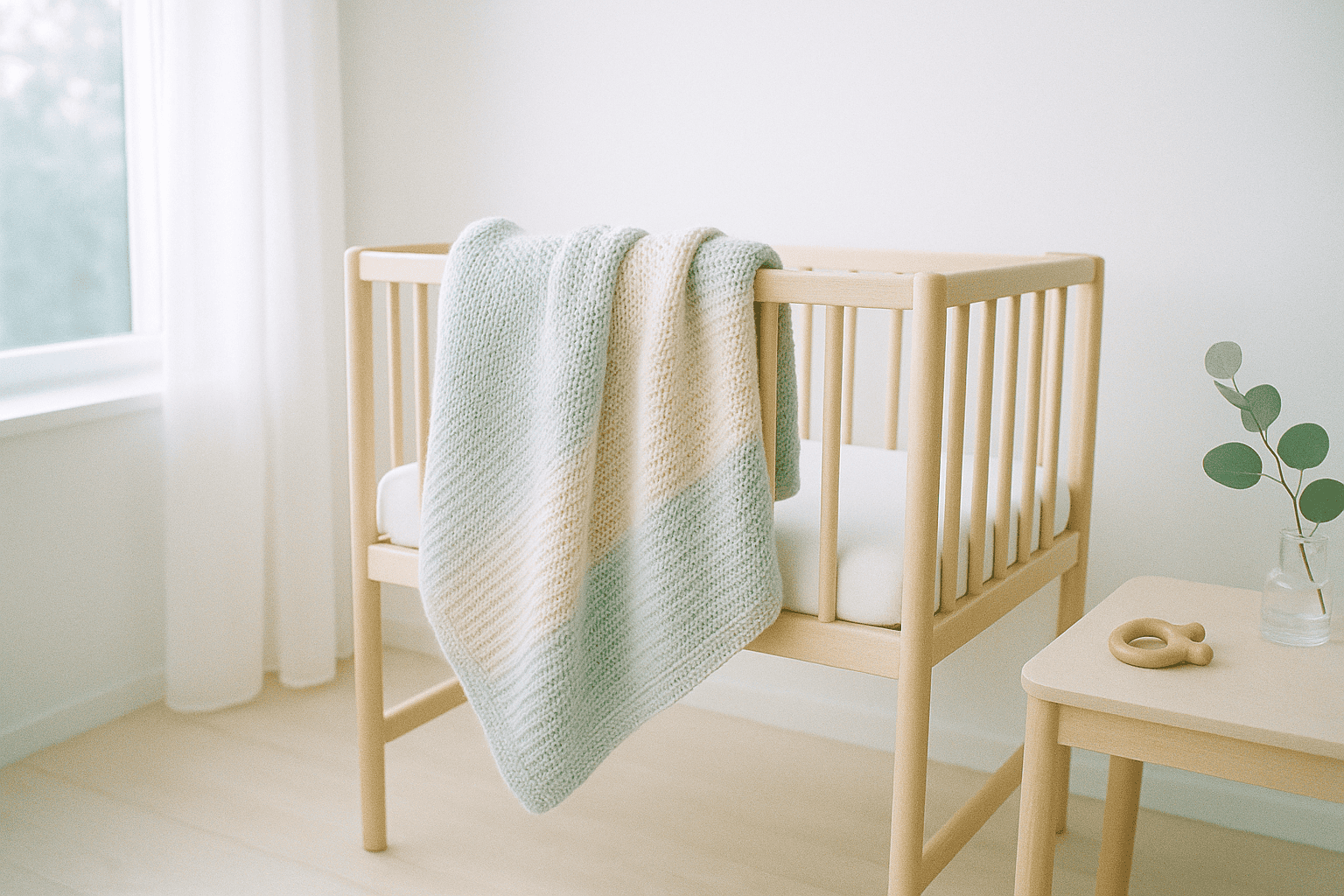
A baby blanket raises a surprisingly large number of questions, and for good reason. A little one's skin is sensitive, temperature regulation is still developing, and everyday situations vary from the cot to the pram and cuddling. That is why a “good blanket” is not only soft, but also safe, easy to care for and suitable for its intended use.
This guide covers how to make a baby blanket yourself using different techniques, how to choose materials and dimensions, and which safety considerations deserve extra attention; it also includes detailed baby blanket instructions.
First, the most important question: when should a baby blanket be used?
When discussing baby sleep safety, one recurring principle comes up: loose blankets and soft objects do not belong in a young baby's sleeping area. The Sleep Association's Finnish guidance emphasises that a baby's cot should not contain a blanket, pillow or other soft objects due to the risk of suffocation. This does not mean that a baby blanket cannot be made or used, but that the situation in which it is used should be chosen wisely.
A blanket is often a practical choice, for example, during supervised cuddling, as a play mat on the floor, outdoors in a pram (positioned correctly) or in a car seat according to instructions, as long as the blanket cannot move over the face. In a cot, especially during the first months, many families prefer a sleeping bag.
For safety, it is also good to remember general EU product safety principles: children's products must be safe and must not have small parts that can easily come loose or long cords that a child could become entangled in.
The right size: different for a pram than for a cot
When making a baby blanket, it is worth basing the dimensions on its intended use and on whether you want a blanket to fit a standard duvet cover. A commonly used size is 80 x 120 cm, as it fits many baby duvet covers and can later also be used by a toddler.
Below is a practical size chart that you can adapt to your own needs.
|
Use |
Recommended dimensions (approx.) |
Why this works |
|---|---|---|
|
Pram blanket |
70 x 90 cm |
Easy to arrange, does not hang down |
|
Multipurpose baby blanket |
80 x 120 cm |
Common size, fits many sheets |
|
Cuddling and first blanket |
60 x 60 cm or 70 x 70 cm |
Lightweight, quick to make, handy to take along |
If you make a knitted or crocheted blanket, remember that it “changes” with use and washing. Make a swatch, measure it, and add a few centimetres to the plan if needed.
Choosing materials: softness alone is not enough
The most important qualities of a baby blanket are breathability, suitable warmth, skin-friendliness and washability. Many choose cotton, bamboo viscose or Tencel-type fibres because they feel pleasant and work well in everyday life. Merino wool can also be a good choice if you can manage its washing and care.
Material safety is easier to assess if the textiles have an OEKO-TEX Standard 100 certification. It indicates that the textile has been tested for harmful substances, which is a significant benefit for baby's skin.
When choosing yarn or fabric, keep these basic guidelines in mind:
- breathable and airy
- washable without special effort
- no strong finishing chemicals or fragrances
- as little shedding and crumbling surface as possible
Synthetic materials such as fleece are popular with many families for pram blankets and mid-season blankets because they dry quickly. For these too, it is worth choosing quality, soft and tested material, and remembering that synthetic fibres do not always breathe as well as natural fibres.
Safe construction: avoid detachable parts and long cords
When a blanket is made at home, the maker is also responsible for safety. It is generally not advisable to add buttons, fringes, long cords or large openwork decorative borders to a baby blanket. They can catch on fingers or end up in the mouth.
Once the basic principles are clear, making the blanket becomes easier. A good rule of thumb is that the blanket should be “one intact surface” that withstands washing and use without anything starting to hang loose.
A checklist helps before use:
- Fastenings: yarn ends are finished and sewn in, with no clusters of knots at the edge
- Decorations: no buttons, beads or appliqués that can be pulled off
- Edges: finished so that the fabric does not fray or the knit does not start to roll
- Feel: no rough seams, no itchy fibres
- Washability: the blanket withstands repeated washing without the construction loosening
Technique 1: a sewn baby blanket from two fabrics
Sewing gives you a neat, evenly thick blanket quickly. This is the easiest method for many if knitting or crocheting is unfamiliar. You can also add lightweight wadding to a sewn blanket, as long as the result is not too thick or warm.
You will generally need two cotton fabrics (or, for example, bamboo or jersey fabric for one side) and, if desired, thin wadding. A good basic idea is a “reversible blanket”: sew the pieces right sides together, leave an opening for turning, turn it inside out and topstitch.
It is worth sizing the materials all at once:
- Fabrics: 2 pieces in the chosen size + 2–3 cm seam allowances
- Wadding (optional): thin, washable quality
- Sewing thread: durable, in a colour close to the fabric
- Needles and tools: fabric scissors or rotary cutter, safety pins or clips
Clear steps:
- Pre-wash the fabrics using the same wash programme you intend to use for the finished blanket.
- Cut the pieces to size.
- Sew around the edges, leaving an opening for turning.
- Turn right side out and press the edges flat.
- Sew the turning opening closed and topstitch the edges to help the blanket retain its shape.
- If using wadding, add a few rows of stitching in the centre as well to prevent the wadding from clumping.
One-sentence tip: the simpler the construction, the easier it is to keep hygienic.
Technique 2: a knitted blanket that does not stretch out of shape
A knitted white baby blanket often feels especially soft and flexible. At the same time, it is good to note that an overly loose knit stretches and “changes” with use, while an overly thick knit can be unnecessarily warm.
Start by choosing yarn intended for baby or sensitive-skin products, with care instructions that suit your everyday life. Cotton blends, bamboo blends and soft merino are common options. Make a swatch and measure the gauge to achieve the desired size.
A basic pattern that almost always works is stockinette stitch or garter stitch. If you want slightly more structure at the edges, add garter-stitch edge stitches or knit a few rows of garter stitch before and after the stockinette section.
For a knitted blanket, the most important safety detail is finishing. Yarn ends must be properly woven in under several stitches and not left “more or less there”, as use and washing can pull them out.
Technique 3: a crocheted blanket when you want pattern and texture
Crocheting is a handy way to make a blanket because progress is clear and patterns are easy to create. For a baby blanket, a fairly dense pattern is usually chosen so that the blanket does not become too open.
A good starting point is single crochet or double crochet, and you can crochet a few rounds of a simple border to help it retain its shape. Crocheted work often uses more yarn than knitting, so allow plenty of yarn, preferably from the same dye lot.
When making a crocheted blanket, check it by holding it up to the light: if the pattern is very open, the blanket may catch on fingers and stretch easily. A denser surface generally works more calmly for baby use.
Technique 4: a fleece tie blanket quickly without sewing
If the goal is a quick, soft and easy-care blanket, a tie blanket made from fleece fabric works well for many. It is made simply by placing two fleece pieces on top of each other, cutting fringes around the edges and tying them.
Here are a couple of practical notes: make the fringes preferably short and the knots tight so that nothing begins to come undone. Although the technique is “no-sew”, the safety of the result depends on careful cutting and tying.
Washing and care: make everyday life easier during planning
A baby blanket needs washing often. Drool, spit-up and other everyday messes do not ask whether the yarn was expensive or the pattern complicated. This is why it is worth choosing the care instructions before you begin.
A good basic approach is a mild, fragrance-free detergent, sufficient rinsing and a temperature suitable for the material. Cotton often tolerates heat better than wool. If the blanket is synthetic, a lower temperature and sufficient rinsing are often sensible.
If the blanket includes wadding or filling, quilting and quality filling material help prevent clumps. Dry it carefully so that the construction remains even.
When making a blanket as a gift or for sale: labels and warnings
If the blanket is a gift, it is considerate to include a small note with the material, care instructions and a usage tip. If the blanket is made for sale, documentation and product safety are even more important. The origin of materials, certifications and clear instructions for use are part of responsibility.
Many families also value flexible purchasing and returns if the size or material does not feel right. In Finland, online shops such as Finnmart.eu often emphasise practical choices that make everyday life easier, such as OEKO-TEX-certified textiles, reliable deliveries and extensive return rights. The same thinking can be brought into the home when making a blanket: choose a material you stand behind, and make the result easy to use and wash.
A small note on dimensions and use
A blanket does not need to be “the one and only”. In many homes, two different blankets work well: a smaller pram blanket and a larger general-purpose blanket that can be used on the floor, sofa and later for naps.
When the dimensions, material and finishing are right, a baby blanket is exactly what it should be: a warm, comforting and practical textile that withstands use and washing year after year.
