Thread count and weave in bed sheets – what quality really means
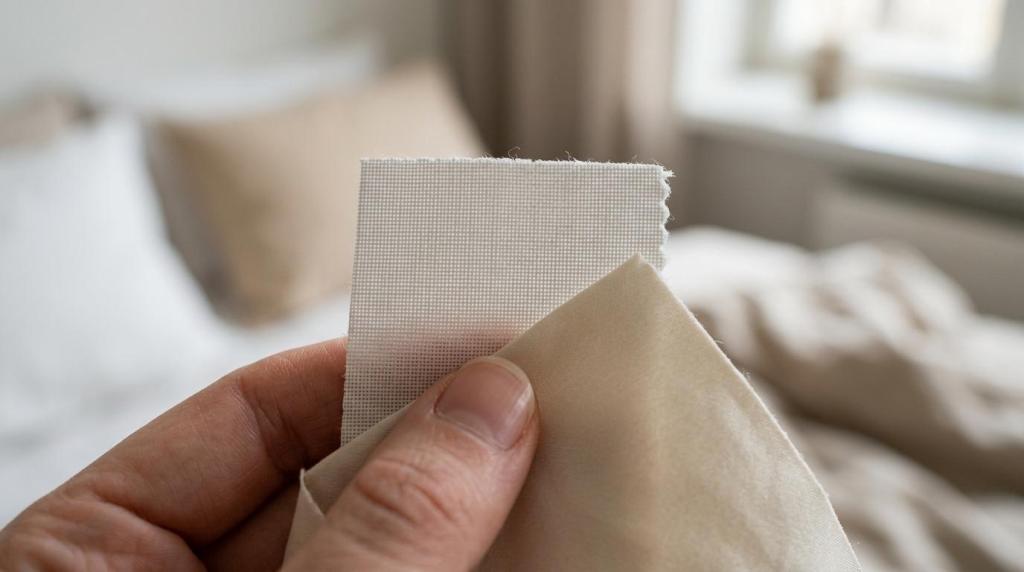
When comparing sheets, your eye often lands on one number: thread count. The higher the number, the better the quality, right? It is an appealing idea because it makes comparison seem easy. In reality, a good sheet is always a combination of several factors.
The same thread count can feel very different depending on whether the fabric is percale, sateen, linen or perhaps bamboo viscose. Fibre quality, finishing, wash durability and intended use also affect whether a sheet feels cool, soft, crisp or warm.
Once you understand the meaning of thread count correctly, shopping becomes easier straight away. Attention then shifts to what matters: how the sheet feels against your skin, how it performs in the wash and whether it suits your own sleeping style.
What thread count means in sheets
Thread count indicates how many warp and weft threads there are per square inch of fabric. If the sheet details state T210 or 210 TC, this means that the fabric has a total of 210 threads within this measurement area.
This metric primarily indicates the density of the fabric. A denser weave often feels smoother and crisper than a looser weave. However, it does not alone tell you whether the fabric is breathable, soft or long-lasting.
Thread count is a metric, not a grade.
Many are surprised to hear that an extremely high thread count does not automatically mean a better sheet. If the fibre quality is modest or the thread count has been made to look high with multi-ply yarns, the result may even be stiff and clammy.
Why a high thread count alone does not indicate sheet quality
In a good sheet, the type of cotton or other fibre used also matters. Long-staple cotton behaves differently from short-staple cotton. It can be smoother, more durable and soften beautifully with washing. In that case, even a moderate thread count can feel exceptionally high-quality.
For cotton sheets, a suitable range is often around 200–400. Within this range, there are many options with good breathability, softness and durability. If you are looking for a very dense, luxurious-feeling fabric, 300–500 is often a reliable choice.
When going above 600, it is worth reading the details carefully. Some products are still excellent, but a high number alone no longer says very much without information about the material and weave.
When the thread count becomes very high, the fabric may no longer breathe as well. It can feel heavier and warmer, which is not the best option for a hot sleeper.
- A good basic range for cotton: around 200–400
- Denser hotel feel: around 300–500
- Very high thread count: requires information about the fibre and weave alongside it
- Best choice: the one that suits your own temperature preferences and use
The weave of sheets affects softness and breathability
Weave describes how the threads run through the fabric. This structure has a major effect on whether a sheet feels crisp, smooth, matte or warm. In practice, many people distinguish sheet quality on the skin more quickly by the weave than by the thread count.
Percale and sateen are the most familiar options in Finnish bedrooms. Their difference is not only in appearance, but also in how the fabric breathes and responds to the seasons.
|
Weave |
Feel |
Breathability |
Suitable for |
|---|---|---|---|
|
Percale |
crisp, smooth, matte |
very good |
those looking for a cool, fresh feel |
|
Sateen |
soft, silky, slightly lustrous |
good, but denser than percale |
those wanting a soft, luxurious surface |
|
Plain weave |
even, straightforward basic weave |
good |
everyday use and those wanting a firmer feel |
|
Twill |
slightly thicker, flexible, textured |
moderate |
those looking for durable fabric |
The weave also affects how a sheet looks after washing. Percale may naturally remain somewhat more wrinkled, while sateen often looks smoother straight after drying.
Percale or sateen in sheets
The choice is often more a question of feel and temperature than quality.
Percale is a densely woven plain weave that feels cool, airy and, to many, hotel-like and crisp. It is well suited to hot sleepers or summer use, but works year-round if you like a fresh surface.
Sateen, on the other hand, does not mean a synthetic material, but a weaving method. Cotton sateen can be a very pleasant option when you want a soft, draping and slightly lustrous sheet. Many find it instantly luxurious, even if the thread count is not particularly high.
This is why even T210 cotton sateen can feel very high-quality. The sateen weave makes the surface smooth, and if the cotton quality is good, the user experience can be exceptionally soft even at this level.
If you want a distinctly cooler feel, percale often beats sateen. If you want a soft surface that feels smoother against the skin, sateen is a better choice for many.
Material changes the meaning of thread count
The same thread count does not mean the same thing in different materials. In cotton, 200–400 can be an excellent range, but for linen or bamboo viscose, quality is not usually assessed in the same way. Their fibre properties matter more than a single number.
Linen is a good example of this. It is naturally strong, breathable and moisture-wicking, and it softens with use. A linen sheet may initially feel rougher than cotton sateen, but for many that is precisely what makes it pleasant. With linen, thread count is not usually the most important comparison point.
Bamboo viscose and lyocell, in turn, are known for their softness and cooling feel. They can feel exceptionally smooth without particularly high thread counts. This is why it is always worth reading the material name and fibre structure as carefully as the TC number.
With cotton blends, the situation changes somewhat again. Polyester can increase durability and reduce wrinkling, but breathability is often lower than with pure cotton, linen or lyocell.
When comparing materials, keep these in mind:
- cotton: a balanced basic choice
- linen: breathable and long-lasting
- bamboo viscose: soft and slightly cool
- lyocell: smooth and highly moisture-wicking
- blended fabrics: easy-care, but often less breathable
Sheet quality is also visible in details other than thread count
A good product description tells you much more than one number. When the details include the material, weave, thread count, certifications and care instructions, you already get a very good overall picture of the product.
For those interested in safety, certifications are an important part of quality. An OEKO-TEX label indicates that the textile has been tested for harmful substances. It does not alone make a sheet luxurious, but for many it is an important sign that the product is pleasant to use even with sensitive skin.
For everyday life, wash durability, shrinkage and whether the sheet retains its feel after repeated washing are also essential. A quality sheet is not only good when new, but also after months of use.
How to read a sheet product description correctly
There are a few details worth considering in a product description. They show whether a sheet has been designed for coolness, softness, easy care or a luxurious feel.
- Material: 100% cotton, linen, bamboo viscose or a blend tells you a lot about the feel in use
- Weave: percale feels cooler, sateen feels softer, plain weave is a straightforward basic option
- Thread count: with cotton, a good level can often be found without extreme numbers
- Certifications: OEKO-TEX provides reassurance about product safety
- Care instructions: washing temperature, tumble drying and ironing needs affect everyday convenience
- Dimensions: for a fitted sheet, mattress height also matters
If the product details state only an exceptionally high thread count without more specific information about the material or weave, it is worth being cautious. A good product stands up to closer questions too.
What thread count in sheets suits different needs
If you sleep hot, a good starting point is cotton percale or another breathable material with a thread count that is not too high. Often 200–300 is perfectly sufficient when the fibre is high quality and the weave is airy.
If, on the other hand, you prefer a soft, denser and slightly warmer feel, cotton sateen can be an excellent choice. In this case, the thread count can be slightly higher without making the sheet too heavy.
In families with children, for active use and for textiles that are washed frequently, it is also worth prioritising wear resistance. In that case, good cotton, a sensible thread count and clear care instructions are a safer combination than the most impressive number possible on the packaging.
Those with sensitive skin or allergies may also benefit from shifting attention away from thread count towards materials and certifications. Against the skin, not only smoothness matters, but also how the fabric breathes and what treatments have been used on it.
So, when choosing your next sheet set, a good question is not only “what is the thread count?”, but “how will this feel in use, after washing and in my own bedroom?” When you consider the number together with the weave, material and product details, you are much more likely to find a sheet that is genuinely comfortable to slip into at night.
