Textile Online Store Returns Guide: How to Try On and Return Responsibly
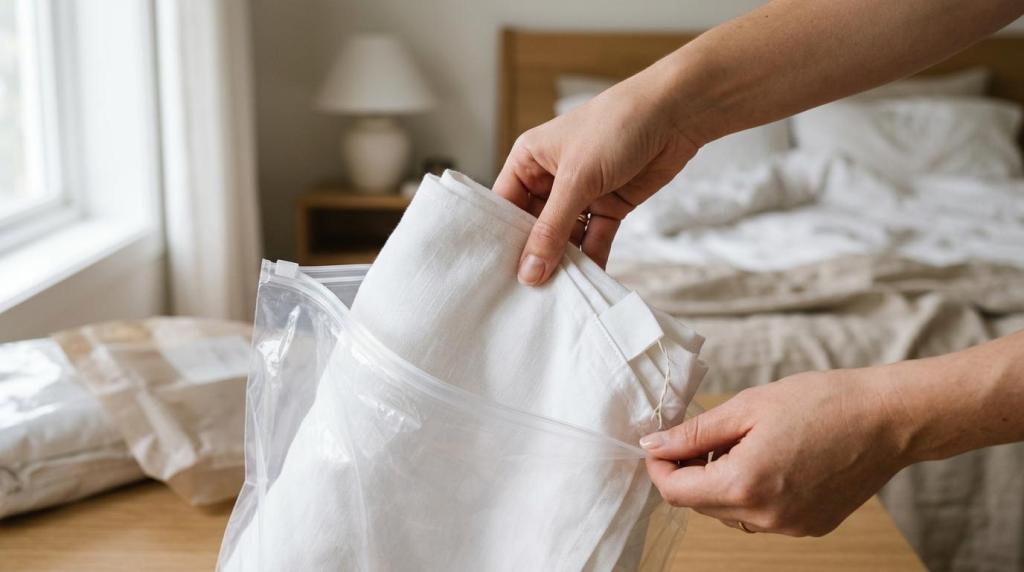
Returning textiles from an online store often sounds easy, until hygiene, packaging and return conditions come into play. With bedding, towels, pillows and other home textiles, the line between inspection and use is more important than usual. The reason is clear: the product must remain safe and suitable for sale to the next buyer as well.
That is why responsible inspection does not mean the same thing as it does with clothing. In practice, bedding is not “tested overnight”; instead, it is inspected carefully with as little contact as possible. Knowing this before placing an order helps avoid many unnecessary returns, as well as situations where the product no longer meets the return conditions.
Why are textile returns handled so carefully?
According to Finnmart.eu terms, returned bedding must be unused, unwashed, undamaged and have their original tags attached. They must not have odours, hair or other signs of use, and they must be folded and packed in the same way as they were delivered. This is not an exceptionally strict policy from the perspective of just one online store, but a very common practice in the sale of textiles and hygiene products.
There are two reasons behind this. The first is hygiene: bedding and other textiles that come into contact with the skin are not the same as decorative items. The second is reducing waste. If a returned product is no longer in like-new condition, it may not be possible to put it back on sale. In that case, one improperly handled return increases both costs and material waste.
Strict conditions also protect the buyer. When the limits of return eligibility are clear, you know when ordering how the product may be opened, felt and inspected.
Responsible inspection begins before ordering
Many returns could be avoided on the product page. When it comes to sheets, a duvet, a pillow or a mattress topper, the right size, material and intended use matter much more than many people realise. If the choice is made in a hurry, a return can easily become a backup plan, even though it should be the last option.
It is worth pausing before going to the basket and checking at least the following:
- size and dimensions
- material and care instructions
- product construction and filling
- colour in natural light and on screen
- compatibility with your bed, duvet or pillow
If you are unsure between sizes or materials, a quick contact with customer service is often more sensible than ordering two options “just in case”. Responsible shopping begins with ordering the most suitable product possible the first time.
What can you do with a textile when the parcel arrives?
When the parcel arrives, you may open and inspect the product. In practice, this means a visual inspection and careful handling. You can look at the product, compare the colour, check the dimensions and assess how the material feels. However, putting the product into use no longer falls within an inspection that preserves return eligibility.
A good rule of thumb is simple: if you would hope to receive the same product as new yourself, return it in the same condition. If the textile has absorbed odours, collected pet hair or become creased through use, a return may no longer be possible.
When inspecting the product at home, do the following:
- Keep the tags in place: Do not remove labels or stickers until you are sure you are keeping the product.
- Keep the original packaging: The bag, box and other packaging components are needed for the return.
- Handle it on a clean surface: It is worth protecting the bed, table or floor with a clean textile.
- Avoid fragrances and contact with pets: Textiles easily absorb odours and hair from their surroundings.
- Do not wash or air it out “as a test”: Washing or actually putting it into use removes the possibility of returning it.
This may sound strict, but in everyday life the approach is simple: open, inspect, decide, and pack it back immediately if the product is not right for you.
What does “trying out” mean with bedding?
With bedding, trying out is not the same as use. For example, you may open and assess a duvet cover or sheet, but you should not make up the bed with it for use. You may feel a pillow through its packaging and structure, but should not sleep on it “just once to try it”. You may assess a duvet by hand, but should not get under it for testing purposes.
If you want to minimise the risk already during inspection, keep the environment as clean as possible. A waterproof molton sheet or other protective textile can help when comparing the product with an existing bed or checking whether the dimensions fit. However, it does not change the basic principle of returns: a returned product must be unused.
Some materials, such as bamboo, have properties valued for hygiene and comfort. However, this does not mean that the product may be used and still returned. The material's positive properties help with the choice; they do not override return conditions.
Pack your return carefully
Responsible returns are also reflected in how the product is packed. Finnmart.eu instructs customers to use the original packaging. This reduces packaging waste and helps protect the product during transport. It also makes the receiving inspection easier, as the product is returned as close as possible to its original delivery condition.
Folding the returned textile is a surprisingly important point. If the product is returned carelessly crumpled up or in a damaged bag, it may become dirty, creased or damaged during transport. In that case, an otherwise intact return becomes difficult to handle.
The table below summarises the practical differences between proper inspection, an unsuitable return and responsible action.
|
Situation |
What to do |
Why it matters |
|---|---|---|
|
The product arrives at your home |
Open it carefully and keep the packaging |
Returns are simply easier when the original materials are retained |
|
You want to check the colour and feel |
Inspect it in a clean space, without using it |
The product remains suitable for sale |
|
The product does not feel right |
Fold it back into as close to its original shape as possible |
The receiving inspection is easier |
|
You return the product |
Use the original packaging and the official return instructions |
Transport is neater and produces less waste |
|
The product has been used |
Do not try to return it as a standard return |
A used textile does not usually meet the return conditions |
When does a return cost money, and why does it matter?
Under Finnmart.eu terms, a standard return where the product is not defective is subject to a €24.90 handling fee. Original delivery costs are not refunded. This is worth considering already when placing an order, as the total cost of a return can become surprisingly high, especially for more affordable products.
The fee is not merely a practical detail. It encourages more considered purchasing and reduces unnecessary returns. When returning is not entirely cost-free, many people check product information and dimensions more carefully than usual. This is often a good thing for both the buyer and the environment.
For heavier products, such as mattresses or mattress toppers, returns may be collected. Such an arrangement makes life easier for the customer, but it does not remove the fact that large textile and bedding products place a greater burden on transport than small parcels. This is why it is especially worthwhile to check details carefully in advance for larger purchases.
The most common mistakes that prevent a return
Often, the problem does not arise from bad intent but from not considering how the product is handled from the perspective of a return. A textile may look perfectly tidy to you, even though it has already picked up odours, fine dust or animal hair.
The most common pitfalls are surprisingly everyday ones:
- The product is washed “just to be sure” before a decision is made.
- The tags are removed immediately after opening.
- The original packaging is thrown away.
- The textile is kept open for a while in a home with pets.
- The product is packed carelessly for return.
With bedding in particular, odours are an essential consideration. Perfume, household detergents, cooking and pets can leave a trace on a textile very quickly. This is why the inspection should be carried out promptly and the return decision made as soon as possible.
What if the product is defective?
A defective product or one damaged in transit is different from a standard return. In that case, it is not about the customer changing their mind, but about the product not being as it should be. In such a situation, it makes sense to follow the complaint instructions rather than the standard return process.
In practice, a good approach is as follows:
- Check the defect immediately: inspect seams, fabric, zips and any damage soon after delivery
- Take photos: clear photos make the matter easier to process
- Keep the packaging: it may be needed to resolve the matter
- Contact us before use: beginning to use the product may make the situation more difficult to assess
At this stage, speed helps everyone. The earlier a defect is reported, the more smoothly the matter will generally proceed.
A responsible return is also a packaging choice
The environmental impact of a return is not determined solely by whether the product is returned or not. The way it is packed also matters. When the original bag or box is reused, less new packaging material is needed. At the same time, the product is better protected on its journey back.
If the original shipping packaging is still usable, it is worth using it. The official return address label or return slip should be attached clearly over the old shipping information so that the parcel is directed correctly. A carelessly taped or damaged parcel causes delays and may, at worst, damage the contents.
Here, responsibility is very concrete: less new cardboard, less tape, and less risk of the product being damaged in transit.
When a return may not be worthwhile
A return is not always the most responsible solution. If the textile you ordered is intact but you simply do not like it as much as you expected, it is worth assessing the situation calmly. After a long transport chain, a handling fee and a possible new order, a return may not be the most sensible option.
Many homes can also make use of a spare sheet, guest duvet or extra pillow protector. If the product is otherwise suitable but not perfect, keeping it may be a smarter overall solution than returning it and ordering a new product.
There is no single right rule for this, but at least these questions can help:
- Is the issue real or just a small change of impression: did the colour look slightly different on screen, but the product still works?
- Will a new order definitely be better: or will you end up with the same uncertainty again?
- What is the total cost of the return: the handling fee, delivery costs and the cost of a new order combined?
- Can the product be used elsewhere at home: in a guest room, at a summer cottage or as a spare textile?
When returns are also considered from a practical perspective, the decision is often easier.
When the product is no longer eligible for return
If the textile has already been put into use, washed or otherwise lost its return eligibility, you should not try to return it as a new product. This is not fair to the seller or the next buyer. At this point, responsibility means something other than completing a return form.
An intact and clean home textile may be suitable for donation if it is not needed in your home. Textiles that are no longer usable should be recycled or disposed of with mixed waste according to textile sorting instructions in your area, depending on their material and condition. In Finland, practices vary slightly by area, so it is worth checking local instructions separately.
Ultimately, an online store return guide is quite simple: inspect carefully, handle neatly, decide quickly and return only if the product genuinely meets the return conditions. When the same idea guides your ordering in advance, the right textile is more likely to arrive at your home the first time.
