How to choose a cooling pillow: materials, feel and neck support
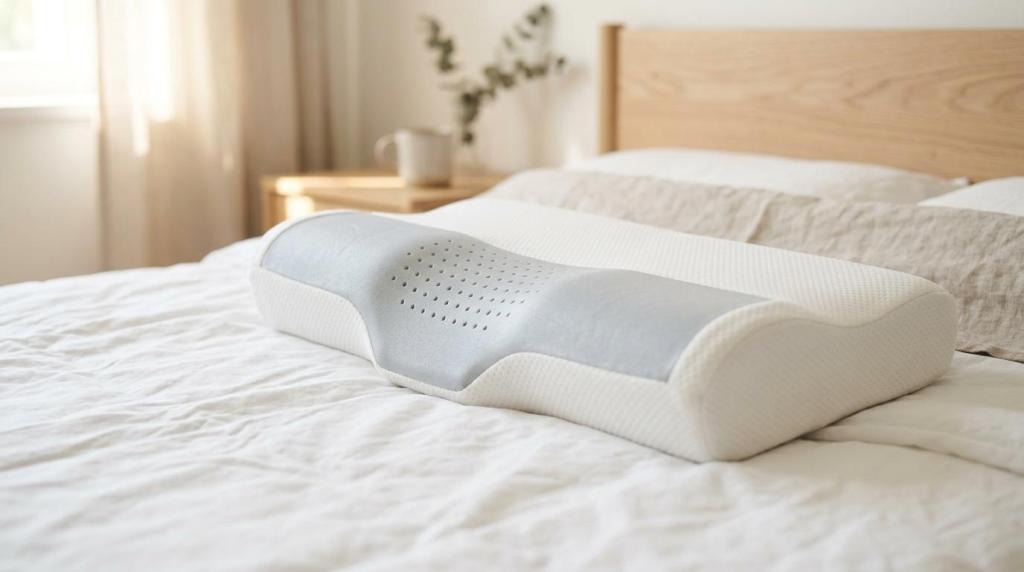
Many people look for a cooling pillow because their head gets hot, the pillow feels sweaty, or their sleep is interrupted by feeling too warm. In that case, it is easy to focus only on cooling. In practice, a good choice is made only when the right height, suitable firmness and a structure that supports the neck are also taken into account.
A cooling pillow is therefore not just a summer product. It can be a practical solution all year round if you sleep warm, sweat easily or want a drier feel during the night.
How a cooling pillow actually works
A cooling pillow does not usually cool actively in the same way as a cold pack. Its effect is more often based on the material feeling cooler against the skin, moving moisture away, allowing air to circulate and reducing heat build-up beneath the head.
This difference is important. If you expect a pillow to stay continuously cold, many products may feel disappointing. If, on the other hand, the goal is less sweaty and more even-temperature sleep, it is easier to make the right choice.
Finnish health guidance emphasises the importance of a cool sleeping environment for sleep quality. The pillow plays a surprisingly large role in this, as heat is felt strongly around the head and neck. When a pillow is breathable, you will often feel more comfortable throughout the night.
Cooling pillow materials affect both temperature and feel
The name of a material tells you a lot, but not everything. The same term can refer to very different structures depending on whether it concerns the cover, filling or core.
The comparison below makes it easier to understand what type of cooling pillow suits your needs.
|
Material |
Feel |
Cooling effect in use |
Neck support |
|---|---|---|---|
|
Microgel / hollow fibre |
Soft, airy, flexible |
Good especially for those who sweat a lot |
Varies, often moderate |
|
Memory foam |
Contouring, firm |
Often fairly warm without additional features |
Good |
|
Visco gel / gel layer |
Cooler initial feel, supportive |
Moderate or good, depending on the structure |
Good or very good |
|
Bamboo viscose or a bamboo-feel cover |
Smooth, soft |
Mainly affects the surface feel |
Depends on the pillow core |
|
Percale cotton cover |
Fresh and dry feel |
Good as a cover material |
Does not alone determine support |
Microgel and hollow-fibre pillows suit many people who want a traditional pillow feel without a heavy or dense structure. They are often lightweight, breathable and easy to shape. If heat is the main issue, this is often a safe starting point.
Memory foam, on the other hand, distributes pressure well and supports the neck more precisely. The downside is that dense foam can feel warm. This is why a cooling memory foam pillow works best when it includes perforations, air channels, a gel layer or a breathable cover.
Rather than looking at the material alone, it is also worth considering the structure.
Neck support determines whether you wake up refreshed or stiff
A pillow that is too high pushes the head forward. One that is too low leaves the neck unsupported. A pillow that is too soft may compress so much during the night that good alignment is lost.
This is why neck support should be the first priority when choosing a cooling pillow. A cool feel can make it easier to sleep, but it does not correct poor alignment.
If you repeatedly wake up with a stiff neck, your pillow may be too high, too low or the wrong shape for your sleeping position. Finnish health sources have noted that an unsuitable pillow can increase strain on the neck.
Your sleeping position provides a good starting point for choosing:
- Side sleeper: often needs a relatively high and fairly firm pillow to keep the head aligned with the shoulders
- Back sleeper: usually benefits from a medium-height pillow that supports the natural curve of the neck
- Stomach sleeper: generally needs a low and soft pillow, sometimes a very thin model
- Combination sleeper: often benefits from an adjustable filling or a medium-height, flexible pillow
If you are looking for both coolness and good ergonomics, memory foam with gel or an orthopaedic visco gel pillow is often a strong option. If you change positions frequently during the night, an airy fibre pillow may feel more natural.
If morning neck stiffness is an issue, a more precisely contoured pillow is often a better solution, even if it feels firmer.
Pillow height and firmness matter more than many people realise
Height is not only a matter of centimetres. It is affected by the amount of filling, how much the material compresses and how the pillow behaves beneath your head over several hours.
A lofty fibre pillow may initially feel luxuriously soft, but if it compresses or shifts to the sides, support quickly decreases. A firm foam pillow, on the other hand, may seem hard in the shop even though it keeps the neck in a better position during the night.
This is why product information should include at least the following:
- height
- amount of filling
- whether the pillow is adjustable
- whether the structure is contoured for the neck
- what type of cover rests against the skin
A good rule of thumb is simple: the broader your shoulders and the more often you sleep on your side, the more height and support the pillow needs to provide.
Cooling pillows in different materials: who each type suits
When materials are combined with sleeping habits, choosing becomes much easier. At this point, you do not need to consider dozens of options, only your own needs.
If the goal is to reduce sweating, an airy fibre structure often beats dense foam. If morning neck stiffness is the issue, a more precisely contoured pillow is often a better solution, even if it feels firmer.
For many people, the most practical choice can be found using these guidelines:
- For those who sweat a lot: microgel, hollow fibre, a 3D mesh structure, a cool cotton or percale cover
- For those needing neck support: memory foam, an orthopaedic model, an adjustable ergonomic pillow
- For lovers of a soft feel: a fibre pillow with good ventilation
- For those seeking firm support: visco gel or contoured memory foam
- For sensitive skin: a soft and breathable cover, preferably easy to wash
If bamboo is mentioned in a product name, it is worth reading the fibre content carefully. Sometimes it refers to bamboo viscose, while other times it is polyester with a bamboo-like feel. These do not behave in exactly the same way.
A cooling pillow and pillowcase work best together
A good pillow can lose some of its cooling effect if it is covered with a thick, heat-retaining pillowcase. This is why the cover material has a surprisingly large impact.
Percale cotton often feels cool and dry against the skin. Thin, tightly woven cotton also works better for many people than a very thick and soft fabric. If the goal is the silkiest possible surface feel, bamboo-viscose-based or satin fabric can feel pleasant, although the actual cooling effect still comes from the pillow structure.
Even a small change can have a clear effect.
If a cooling pillow does not feel cool enough, the reason is not always the pillow itself but the materials chosen around it.
What to check in a product description before making a purchase decision
Many people choose a pillow based on its name. That is not enough, as the words "cooling", "gel" and "bamboo" can mean very different things.
It is worth looking for a few specific details in the product description to distinguish a truly breathable pillow from a mere marketing term.
- Filling: whether it contains fibre, memory foam, gel or a combination of these
- Cover: what material the surface against the skin is actually made from
- Structure: whether it has perforations, air channels or 3D mesh
- Adjustability: whether the height or filling can be adjusted
- Washing and care: whether the cover or the entire pillow can be washed
- Dimensions: height and width matter more than the product name alone
If the information only refers generally to cooling properties while the materials remain unclear, it is harder to make a reliable choice. In that case, it is worth favouring products that clearly state their structure and fibre content.
When an orthopaedic cooling pillow is a sensible choice
An orthopaedic cooling pillow is not necessary for everyone. It is best suited to situations where a soft traditional pillow is no longer enough to keep the neck in a good position.
Many people benefit from an orthopaedic model when their neck tires easily, their head turns sharply to the side during the night, or an ordinary pillow flattens by the early morning. A contoured model supports the cervical spine more steadily and can reduce the need to keep searching for a position.
However, a good orthopaedic pillow should not be too high simply because it looks more supportive. If its height does not suit your body and sleeping position, even a high-quality pillow can feel unsuitable.
In this situation, an adjustable model is often a sensible choice.
When to replace a cooling pillow
You do not need to replace a pillow according to the calendar, but it is worth recognising signs of wear. If the pillow no longer returns to its shape, feels lumpy, loses its support or starts to feel sweatier than before, its performance may have clearly declined.
Fibre pillows generally soften more quickly than firm foam pillows. Memory foam, in turn, can gradually lose its resilience or begin to feel uneven. Hygiene also matters, as moisture, skin secretions and infrequent washing affect a pillow's freshness.
The following signs often indicate that it may be time for a new pillow:
- the pillow flattens every night
- your neck is often stiff in the morning
- the cool feel has disappeared
- the filling is lumpy or uneven
- the pillow is difficult to keep clean
If you are unsure which direction is most suitable, this often makes the choice easier: first decide whether you need more cooling or more neck support, and only then consider the material. For a warm sleeper, a breathable microgel pillow is often a natural starting point. For someone with neck symptoms, a better starting point is an ergonomic gel or memory foam pillow that also takes ventilation into account.
