Cooling technology in bedding: materials and how it works
Many people think that cooling bedding means a sheet or duvet that feels cold. In reality, it is usually a much more subtle matter. Good cooling comes from preventing heat and moisture from lingering close to the skin, instead allowing them to move away from the body in a controlled way.
That is why the best cooling bedding does not necessarily feel icy, but comfortably dry, airy and lightweight throughout the night. The difference is especially noticeable when the sleeper sweats easily, the bedroom is warm in summer, or the duvet feels stuffy in the early hours of the morning.
What actually creates the cooling effect?
A small microclimate forms around the body in bed. If the fabric retains heat and moisture, you quickly start to feel clammy. If the material breathes well and moves moisture onwards, the skin stays drier and the temperature more even.
Cooling technology therefore does not usually "produce cold", but rather reduces overheating. This is an important distinction. The same product may feel cool to one person and simply pleasantly neutral to another.
Comfort comes from three things: air circulation, moisture management and moving heat away from the skin.
The most common cooling solutions in bedding
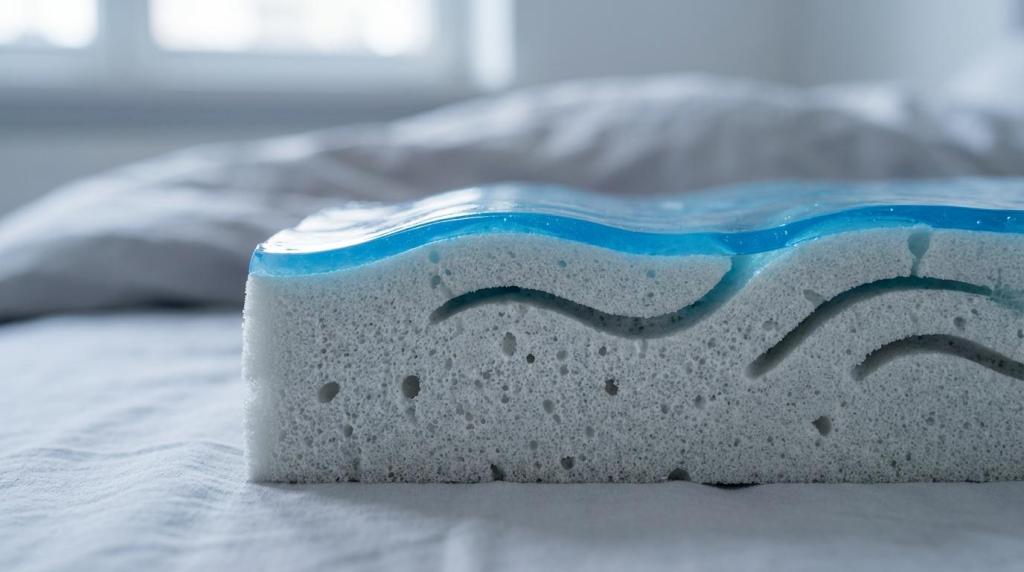
There are both simple and more technical solutions on the market. Some are based on the natural properties of fibres, some on structure, and others on material technology, such as phase-change materials or gel-like fillings.
In practice, most products use passive cooling. They do not require electricity or machinery, but work through materials, weaving and fillings.
|
Technology |
How it works |
Where it is most noticeable |
Note |
|---|---|---|---|
|
Breathable fabric |
Allows air and water vapour to pass through |
Sheets, duvet covers, duvet cover fabric |
Often feels lightweight and dry |
|
Moisture-wicking fibre |
Draws sweat away from the skin to the fabric surface |
Sheets, pillowcases, fabrics familiar from sportswear |
A good choice for night sweats |
|
Phase-change material, PCM |
Temporarily absorbs heat as the temperature rises |
Covers, toppers, pillows |
The effect is often balancing rather than icy cold |
|
Gel or cooling foam |
Conducts heat away from the contact surface |
Pillows, mattress toppers, memory foam products |
The surface feel may be firmer than usual |
|
3D air channels and open structure |
Increases air circulation in the filling |
Duvets, pillows, mattress protectors |
Works well even without special fibres |
|
Active cooling |
Ventilation or water circulation mechanically moves heat away |
Special mattresses and accessories |
Less common for home use |
Material matters more than a marketing claim
When talking about cooling bedding, attention easily turns to technical names. Yet in everyday use, the biggest difference often comes from very basic factors: what fabric is against the skin and how it is woven.
Linen is a good example. It naturally feels airy and does not trap heat against the skin in the same way as denser, thicker fabric. Many find linen best in summer, even though its surface may initially feel slightly rougher than smooth cotton.
Bamboo viscose and lyocell are also popular because they are soft, drapey fibres that manage moisture well. Their coolness is often related to the fact that the fabric does not feel heavy or stuffy. Cotton, on the other hand, can be either a good or mediocre cooling material depending on the weave. Lightweight percale is very different from dense, thick cotton fabric.
Synthetic fibres do not automatically mean a stuffy feel. Technical polyester, microfibre and special moisture-wicking fibres can work well when their structure is designed correctly. The idea is then not to absorb sweat into the material itself, but to move it away from the skin so it can evaporate.
The following materials often come up when looking for a cooler sleeping environment:
- Linen: airy, quick-drying, good for hot nights
- Bamboo viscose: soft, smooth, considered cool-feeling by many
- Lyocell: manages moisture well, lightweight against the skin
- Percale cotton: crisp and firm, works better than thick cotton
- Technical microfibre: lightweight, quick-drying, often easy to care for
- Hollow fibre filling: keeps the duvet lightweight and supports air circulation
Cooling technology does not always mean the same thing
Not all products described as cooling work in the same way. Some provide an immediately cool surface feel, some reduce heat build-up during the night, and some even out temperature fluctuations so you do not become too hot.
PCM, or phase-change material, is a good example. Its purpose is to absorb heat when the temperature rises above a certain point. When the surroundings cool down, the material releases heat back. This kind of solution may not feel dramatic when tested by hand, but it can ease temperature spikes during the night.
Gel and cooling memory foam work differently. They conduct heat away from the contact surface and may feel distinctly cooler at first. This is useful in pillows because the head and neck warm up easily. One drawback is that some users find gel or foam solutions firmer than usual.
Structural solutions sometimes receive less attention, even though they are often highly effective. 3D air structures, open-cell foams and airy fillings allow air to move inside the duvet or pillow. This can have a greater impact than the fibre name alone in the product description.
Who is cooling bedding best suited for?
The need is not limited to hot nights alone. Many people find cooling materials beneficial all year round if there is little ventilation in the bedroom or their body tends to become hot at night.
The best choice depends on which problem is the greatest. Is it sweating, a heavy duvet, a warming pillow, or the entire bed feeling stuffy?
Typical situations include:
- night sweats
- a warm bedroom
- a memory foam pillow heating up
- a stuffy feeling caused by a thick duvet
- feelings of warmth associated with menopause
- summer use at a cottage or in an apartment building
If the issue is specifically the head getting warm, a cooling pillow often brings faster relief than replacing the entire bedding setup. If the whole body gets hot, the materials of the sheets and duvet become most important.
What does research say about the effect on sleep?
Studies have shown that cooling bedding can improve perceived thermal comfort. In some trials, sleepers have managed in a warmer room without increased discomfort. This may also matter for household energy consumption in summer.
Still, results for sleep quality measures are not always unequivocal. Not all studies show a clear change in sleep duration or the number of awakenings, even when skin temperature drops slightly. This is not particularly surprising, as sleep does not depend on just one factor. Stress, noise, light, the mattress, pillow and indoor air also affect it.
Even so, the benefits experienced in everyday life can be significant. If the sheet does not feel wet, the duvet does not feel heavy when warm, and the pillow stays fresher, the night often becomes more restful. Not all comfort can be captured by measuring devices alone.
How to choose a setup that works
The best result rarely comes from a single miracle product. Most often, a cooler sleeping environment is built in layers: the sheet, duvet, pillow, mattress protector and room temperature all affect one another.
It is worth starting with the area where the problem feels most obvious. If your back sweats, it is worth changing the sheet or mattress protector. If your neck gets warm, the pillow is the right place to start. If the whole duvet feels heavy, a lightweight and airy filling helps more than simply replacing the duvet cover.
A practical choice often proceeds like this:
- Identify the main problem: sweat, a hot surface, a heavy duvet or poor ventilation.
- Choose the right material: linen and lyocell for airiness, technical fibre for moisture transfer, gel or open foam for a pillow.
- Check the structure all the way through: the cover, filling and weaving method all matter together.
- Keep the setup lightweight: an overly thick duvet can easily cancel out the benefits of a cooling sheet.
For many, a combination of sheets made from natural fibres or lyocell, a lightweight hollow-fibre duvet and a pillow with air channels or cooling foam works well. This keeps the setup breathable without making it feel overly technical.
There is a lot of variation in pillows and duvets
The pillow is often the first place where cooling technology is noticed in practice. The head continuously releases heat, and if the pillow core retains heat, the whole experience quickly becomes stuffy. That is why memory foam pillows increasingly use a more open cellular structure, a gel layer or ventilation channels.
For duvets, the most important thing is a combination of lightweight filling and a breathable cover. There are products on the market that aim for this with a 3D air structure, microfibre percale or a bamboo touch-type surface. They are not all alike, but the idea is the same: less heat, better air circulation.
Product ranges also include pillows that seek cooling through microgel, Blue Cell-type foam construction or a bamboo-treated cover. With these, it is worth looking beyond the marketing name and checking which part of the product actually does the work. Is the cooling in the surface, the filling or the structure?
Care has a surprisingly large impact
Even a good material will not feel cool if the bedding is clogged with detergent residue, moisture or compressed filling. Care directly affects air circulation, especially in pillows and duvets.
It is worth following the care instructions, as some technical treatments and microencapsulated solutions wear out faster than usual when washed incorrectly. Washing at too high a temperature, heavy spin cycles or continuous use of fabric softener can impair moisture transfer.
Useful basics include:
- Regular airing: moisture is removed before it remains in the textile
- The correct washing temperature: protects fibres and any cooling treatments
- Light filling care: the loft of a duvet and pillow supports air circulation
- Avoiding fabric softener: it can impair the performance of technical fibres
When material and structure support each other
Cooling bedding works best when a product does not try to do everything with one trick. Natural fibre can provide airiness, technical fibre dryness, and a 3D structure can increase air movement. Together, they achieve more than any single stated feature.
That is why it is worth looking at the whole product when making a choice. The word "cooling" alone does not tell you whether a sheet will feel drier, a pillow will stay fresher or tossing and turning under the duvet will decrease. When the materials, structure and your own sleeping habits suit one another, the difference is usually noticeable quickly, from the very first nights.
