7 signs of a high-quality cotton sheet
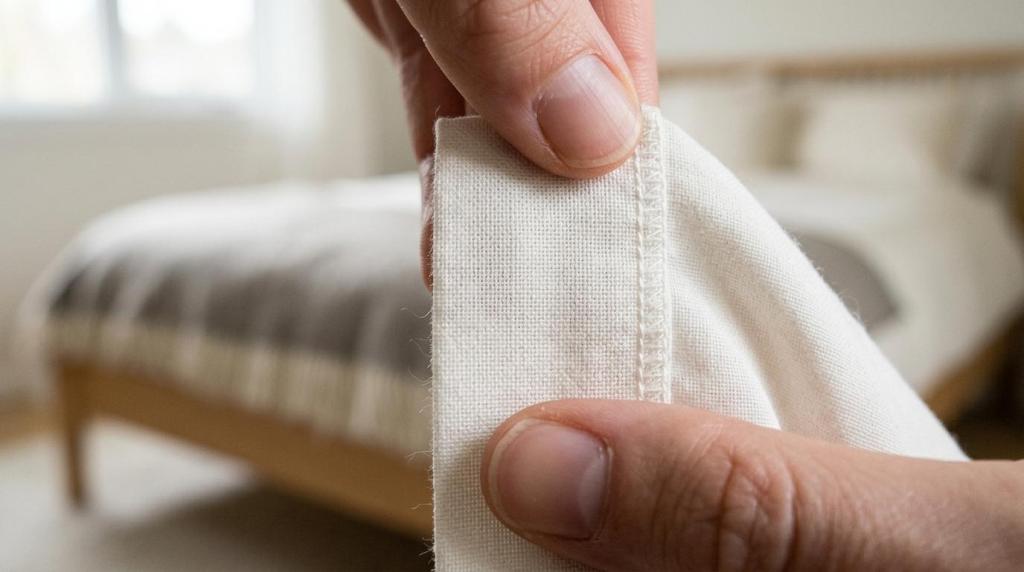
You cannot identify a good cotton sheet from a single number or marketing term. Quality usually becomes apparent only when fibre type, weave, thread count, finishing and certification are considered together.
TL;DR: Summary
- A high-quality cotton sheet is best identified by combining three factors: long-staple cotton, a suitable weave such as percale or sateen, and independent harmful-substance testing such as OEKO-TEX STANDARD 100.
- A high thread count alone does not mean better quality. A well-made 300 thread count 100% cotton percale can feel more breathable and comfortable than 1,000 thread count fabric containing synthetic fibres.
- Long-staple or extra-long staple cotton, such as Pima or high-quality Egyptian cotton, enables finer yarn, a smoother surface and often better durability than standard short-staple cotton.
- OEKO-TEX STANDARD 100 indicates that every component of the textile has been tested for more than 1,000 harmful substances. However, it does not by itself prove that the cotton is premium quality.
- In practice, a good purchase is found when the product description clearly states the material, weave, care instructions and certification. If the information is vague, the risk of disappointment increases.
If you want a quick purchasing rule, check the fibre first, then the weave and only then the thread count. This way, you can distinguish a genuinely high-quality cotton sheet from a product that only looks good in its packaging.
How can you quickly identify a high-quality cotton sheet?
A high-quality cotton sheet can usually be identified by three things: long-staple cotton, a clearly stated weave such as percale or sateen, and OEKO-TEX STANDARD 100. Pima and Egyptian cotton are often more even and softer than standard Upland cotton.
The quickest check is this: is the material 100% cotton, is the fibre length or cotton variety mentioned, and is the weave openly stated? If the product page only talks about “luxurious softness” but gives no details on the fibre or structure, the information is too limited.
Many people assess a sheet only by how it feels to the touch. This is a common misconception, as finishing agents can make new fabric feel soft even if the fibre is short and the fabric pills or thins faster than usual in the wash.
"A duvet cover set made from 100% Egyptian cotton is listed in Finnmart.eu's product information with a T200 rating and OEKO-TEX certification."
A safety label completes the picture but does not determine everything. OEKO-TEX STANDARD 100 indicates that the finished textile and its components have been tested for more than 1,000 harmful substances; it does not mean that the cotton is automatically long-staple or more durable than usual.
Why does thread count not alone indicate quality?
Thread count only indicates the number of warp and weft threads per square inch. Thread count is useful only when fibre type, ply construction and weave are also considered.
Thread count is calculated from warp and weft threads, referred to in English as warp and filling. The number therefore indicates the density of the construction, not directly the quality of the fibre. If the yarn is coarse, short-staple or multi-ply, a high number will not improve the feel.
For this reason, 300 thread count 100% cotton percale can be a better purchase than a 1,000 thread count sheet containing synthetic blend fibres. This is an important comparison point for buyers: a moderate number combined with good fibre is often better than an exceptionally high number without further information.
One practical tip is to be cautious about very high numbers if the product description does not state the yarn construction. Multi-ply yarn can look impressive on paper, even though the result may not feel as breathable or long-lasting as fabric made with simpler, high-quality yarn.
What are the 7 signs of a high-quality cotton sheet?
A high-quality cotton sheet can be identified by several small signs, not one superlative. The best combination is long fibre, a clearly stated weave, an honest product description and tested safety.
When you review product information systematically, seven signs quickly stand out:
- Long-staple cotton, such as Pima, extra-long staple or high-quality Egyptian cotton.
- 100% cotton without unexplained blends.
- A stated weave, such as percale or sateen.
- A moderate thread count; around 200–400 is often more than sufficient for cotton.
- A mention of yarn quality, such as combed or ring spun.
- Independent certification, such as OEKO-TEX STANDARD 100.
- Precise care and size details without vague marketing language.
Not every sign has to be met perfectly, but the more that are, the lower the risk of a poor purchase. If a product only states one impressive figure, such as thread count, the overall picture remains incomplete.
Which is more suitable, percale or sateen?
Percale is generally suitable for those seeking a cool, crisp feel, while sateen suits those who value a soft, smooth surface. Both can be high quality if the material is 100% cotton and the fibre is good.
Percale is a tightly woven plain weave that feels fresh, matte and slightly crisp. It is a good choice for many people who get warm easily while sleeping or like a structured, hotel-style sheet.
Sateen is made using a different weave. Its surface is smoother and often slightly shinier. Many people assume that sateen automatically means synthetic fabric, but cotton sateen can be entirely 100% cotton.
"Finnmart.eu describes a 100% cotton sateen fitted sheet as naturally soft and breathable."
If you are wondering which lasts better, the answer depends more on the fibre and finishing than on the weave name alone. Percale often retains its crisp appearance for longer, while sateen can feel softer and drape more smoothly from the start.
How do you check fibre type and fibre length step by step?
It is worth checking the fibre type before thread count. Pima, Egyptian cotton and extra-long staple often provide a more reliable sign of quality than a single thread count figure.
Step 1: first look in the product description for the cotton variety or fibre length. If Pima, extra-long staple or long-staple is mentioned, it is usually a good sign.
Step 2: check whether cotton is only discussed in general terms. Upland cotton is the most common type of cotton and makes up the majority of the world's cotton, so “100% cotton” alone often means standard cotton without a more specific quality claim.
Step 3: see whether the fibre information is paired with the weave. Long-staple cotton in a percale or sateen weave says more about the final feel than either piece of information alone.
At this point, many people are misled by the name. “Egyptian cotton” can be a good sign, but the name alone is not enough if the seller provides no further details about the material, manufacture or certification. If the information is only an advertising phrase, it is worth continuing your comparison.
How do you read the product description and certifications correctly?
A good product description states four key things: the material, weave, thread count and certification. OEKO-TEX STANDARD 100 and a clear fibre description together are much more useful than a single sales claim.
When reading a product page, review at least these points:
- Material: 100% cotton or a cotton blend.
- Weave: percale, sateen or another named construction.
- Thread count: a moderate, credible value, not simply the highest possible figure.
- Certification: OEKO-TEX STANDARD 100 or other independent testing.
The most common misunderstanding about certifications concerns what they actually measure. OEKO-TEX STANDARD 100 means testing for harmful substances, and every part of the product is tested for more than 1,000 substances. The limit values are updated at least once a year. This is important safety information, especially for sensitive skin, but it does not by itself make a fabric luxurious or long-staple.
If the product page also states care instructions, shrinkage risk and the country or method of manufacture, transparency generally improves. An open product description does not guarantee a perfect product, but it clearly reduces the number of unclear purchases.
Should you choose 100% cotton or a cotton blend?
100% cotton is generally the better choice for breathability and a natural feel. A cotton blend can still be sensible if easy care, faster drying or a lower price matters most.
Pure cotton absorbs moisture well and feels more pleasant against many people's skin. If you sleep warm, perspire at night or value a natural fibre, 100% cotton is often the clearest choice.
In a cotton blend, such as cotton-polyester, the benefit may be less creasing and easier everyday care. The downside is often lower breathability and a slightly more synthetic feel. At this point, it is worth considering how it will be used, not just the price.
"Finnmart.eu offers a 14-day EU right of withdrawal, making it easier to assess the feel and size of a sheet at home."
If you want the coolest, most natural sleeping comfort possible, choose 100% cotton. If sheets are washed frequently, dried quickly and you want to minimise ironing, a good-quality blend can be an acceptable compromise.
How should you wash and care for a new cotton sheet?
A cotton sheet should be washed before first use. A 40 or 60 degree wash according to the care instructions, a moderate load and avoiding excessively hot drying will extend its lifespan.
Step 1: wash new sheets separately or with similar colours. The first wash removes manufacturing dust and helps the fabric settle into use.
Step 2: follow the temperature stated on the product label. Many cotton sheets can withstand washing at 40 or 60 degrees, but an excessively hot programme can wear the colour and increase shrinkage.
Step 3: avoid overfilling the washing machine. When the drum is too full, the fabric does not get properly cleaned or rinsed, and the fibre is put under unnecessary strain.
Fabric softener should be used with care. It can make the feel smoother, but percale in particular, when breathability is desired, may lose some of its fresh feel. Tumble drying is suitable for some products, but low heat is generally safer than a hot programme.
When should you not buy a cotton sheet, even if it feels soft?
An overly soft initial feel can be a warning sign if the fibre, weave or certification remain unclear. Surprisingly many disappointments arise when a product feels good in the shop but wears out quickly at home.
Softness can come from good fibre, but also from chemical finishing or blended fibres. That is why touch alone is not enough. If the product does not state whether it is percale or sateen, whether the fibre is long-staple and whether the material is truly 100% cotton, it is worth taking your time with the purchasing decision.
Common warning signs include:
- Unclear material: “cotton blend” without an exact percentage.
- Excessive thread count: a high number but no information about the fibre or yarn.
- Missing weave information: no mention of percale, sateen or another construction.
- Marketing language only: many promises, little technical information.
- No independent testing: especially a drawback for sensitive skin.
If you have sensitive skin or are looking for sheets for long-term use, these shortcomings matter more than the softness of the first touch. A good sheet also appears honest in its care instructions and product information.
How do you choose the right cotton sheet for your own use?
The right cotton sheet depends on the sleeper, not just the material. Percale, sateen and long-staple cotton serve different needs, so the best choice is found through how it will be used.
If you rarely feel cold and value a cool feel, choose percale and 100% cotton. If you instead want a softer, smoother and slightly more luxurious surface, cotton sateen is often better.
If everyday durability matters most, look for a combination with clear fibre information, a credible thread count and independent certification. If your budget is tight, do not chase the maximum thread count. A better solution is to look for an honest 200–300 T cotton sheet with proper material information.
A simple rule works well: if a product openly states what fibre it is made from, how it is woven and how it has been tested, you are already much closer to a high-quality cotton sheet than by looking only for the largest possible number.
