The best self-tanner
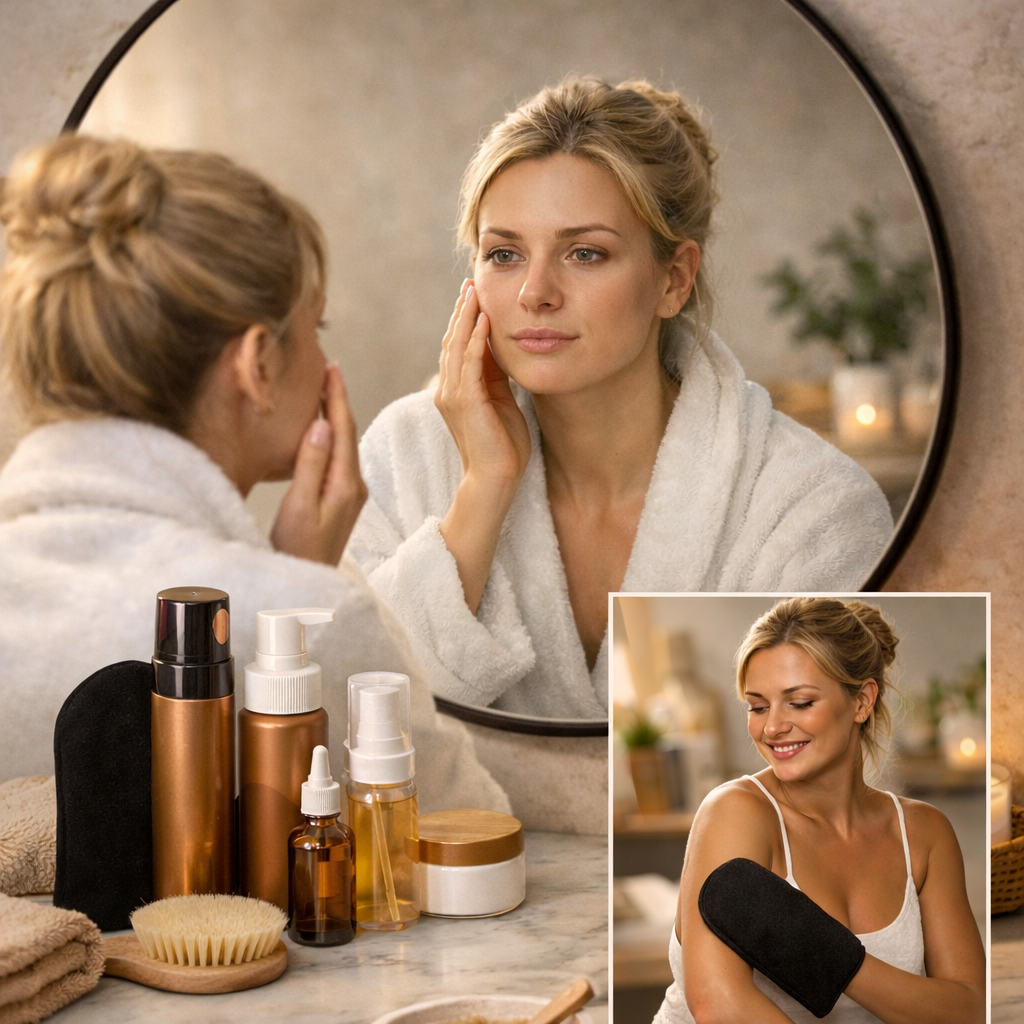
In winter, the skin looking back at you in the mirror often appears more tired than you feel. That is when a self-tanner can be a surprisingly effective quick fix: a little warmth in your tone, a more even overall look and often a more confident feeling, without UV exposure.
However, the “best self-tanner” is not one specific product, but a combination of the right shade, a suitable formula and careful application. When these are right, the result looks natural and wears off neatly in everyday life.
What does “best” mean in a self-tanner?
Many people look for the best product assuming that a certain brand or formula would always be superior. In practice, the best one is the one that works with your own skin, routine and clothes.
Differences arise from at least these factors: how quickly the colour develops, what the undertone is like (golden, neutral, warm), how easily the product spreads, whether it dries the skin and how evenly it wears off.
If your goal is “sun-kissed but believable”, it is worth approaching self-tanner like makeup base: the same shade does not work for everyone, and the application technique affects the result as much as the product itself.
How does self-tanner work on the skin?
Most self-tanners work through DHA (dihydroxyacetone). It reacts with proteins and amino acids in the outermost layer of the skin in what is known as the Maillard reaction. This produces brownish pigments (melanoidins) that “colour” the dead outer layer of skin cells.
This has two important practical consequences:
- The colour is not permanent; it fades as the skin renews itself, usually within a few days.
- Self-tanner does not increase the skin's own melanin or protect against the sun, so sunscreen is still a separate matter.
In some products, DHA is supplemented with erythrulose. It develops colour more slowly, and many find that the shade can look softer. Many mousses and creams also contain a “guide colour”, which is visible immediately during application and washes off later. It is not the final tan, but an aid for even application.
The formula matters: mousse, cream, spray or gel?
The formula affects how easy application is and how the skin feels over the following days. The same active ingredient may work beautifully in one form and awkwardly in another if your skin is dry, sensitive or if you want very fast drying.
Below is a concise comparison to help you choose the type that suits you.
|
Formula |
Suitable for everyday use if you |
Pros |
Cons |
Typical development time |
|---|---|---|---|---|
|
Foam/mousse |
Want quick application and a clear result |
Usually dries quickly, easy to apply with a mitt, shade often intense |
May cling to dry areas, fragrance may be more noticeable |
1–8 h depending on the product |
|
Cream/lotion |
Want a gradual, caring result |
Moisturising feel, often easier to keep even with daily use |
May feel “slippery” for longer, requires careful application |
4–12 h, several days for gradual products |
|
Spray/mist |
Want a light layer or need to reach difficult areas (back) |
Quick, lightweight feel on the skin |
Easy to apply unevenly, it is advisable to protect the respiratory tract |
2–8 h |
|
Gel |
Want a fast-absorbing option that is “not too creamy” |
Pleasant for many, thin layer, often dries quickly |
May be slippery to apply without a routine, borders are easy to leave behind |
2–8 h |
|
Gradual self-tanner |
Want to maintain your shade without a “tanning day” |
Easy to control, often suitable for beginners |
Requires repeat application, result is slower |
1–3 days with layering |
Choose the formula according to what you are most likely to apply carefully. If you know that speed always wins, mousse or gel is often the easiest way to succeed.
What should you look for on the product label?
A good product usually feels good on the skin even on the third day, when the colour is at its best. This is surprisingly often related to the basics: moisturising ingredients, the amount of fragrance and whether alcohol is included and drying.
When comparing options, this is useful in practice:
- Shade and undertone: neutral is a safe choice for many, while warm can look stunning in summer but can easily emphasise orange tones.
- Sensitivity and fragrances: if you react to scents, look for one with as little fragrance as possible and test it on a small area.
- Drying time: in a busy routine, quick drying reduces the risk to clothing.
- Guide colour: helps with evenness, but may stain textiles before the first shower.
- Caring ingredients: glycerine, aloe and similar ingredients help the colour wear off evenly.
And if you buy products online, it is convenient to include everyday essentials in the same order as well: an application mitt, mild shower gel, fragrance-free body lotion. Many buy these from the same place as other hygiene products to keep their routine simple.
How to achieve an even shade: preparation and application
Success happens largely before the cap is opened. The skin's surface matters: if the outer skin layer is uneven, colour will adhere unevenly.
Here is a practical basic routine that suits most people:
- The day before: gently exfoliate and moisturise the skin.
- Hair removal in good time: if you shave, preferably do so 24 hours earlier to allow the skin to calm down.
- Shower on the day of application: wash your skin and allow it to dry thoroughly.
- Take care of dry areas: apply a thin layer of moisturiser to elbows, knees and ankles before self-tanner.
- Apply in sections: lower legs, thighs, torso, arms. Use a mitt and circular motions.
- Hands and feet last: fingers and wrists: finish with a very small amount, and wash your palms immediately.
- Drying time: wait at least 10 minutes before getting dressed and choose loose clothing.
If you use an express-type product, follow its own shower instructions. Washing too early makes the shade light, while washing too late may deepen the colour more than you wanted.
How long does the colour last, and how is it maintained?
Because the colour is attached to the outermost layer of the skin, it fades as the skin renews itself. For many people, the shade stays neat on the body for around 5–10 days, and often for a shorter time on hands and face.
Its longevity is affected surprisingly much by how your skin is over the following days:
- Dry skin starts to “flake” and the shade becomes patchy.
- Hot showers, sauna use and vigorous exfoliation speed up fading.
- Swimming pools and chlorine can make the shade patchier.
Maintenance is often simpler than a new full application. If you want to keep the shade even, light daily moisturising and a small touch-up after 2–4 days works better for many than waiting for everything to wear off.
This is also where textiles become surprisingly important. During the first night, some products may transfer to sheets, even if the skin feels dry. A dark nightshirt, an old towel over the sheet or an easy-to-wash duvet cover can save you worry. Online stores selling home textiles, such as Finnmart.eu, are therefore a familiar place for many to find practical spare-sheet-type solutions for everyday life while restocking their bathroom cabinet.
Safety and considerations for sensitive skin
Self-tanners are generally well tolerated, but for sensitive skin, issues more often arise from ingredients other than DHA. Fragrances, certain preservatives and solvents can irritate, which is why a small patch test is sensible.
If your skin reacts easily, do this:
- Apply a small amount of product to the crook of your elbow or behind your ear.
- Wait 24–48 hours.
- If itching, redness or stinging occurs, do not use the product.
When using sprays, protecting the respiratory tract is sensible. Do not spray onto the face in an enclosed bathroom without ventilation, and avoid getting the product in your eyes or on mucous membranes. It is generally not advisable to apply self-tanner to broken skin or an area of skin that has just been irritated by a rash.
And one more thing that is easily forgotten: self-tanner does not replace sunscreen. If you spend time outdoors in the spring sun, SPF is a separate step.
The most common mistakes and quick fixes
Lines at the wrists, dark knees and patchy lower legs are classics. The reason is often either too much product on a dry area or rushed application without a mitt.
Correction is usually quite straightforward when you proceed calmly:
- If the patch is fresh: a warm shower and soft exfoliating mitt can even out the guide colour.
- If dark areas are on dry spots: apply a thicker moisturiser overnight and exfoliate gently the following day.
- If a line is visible: apply a very small amount of self-tanner over the edge with an “empty mitt” so it blends out.
On the face, the best result often comes from a serum-like, lightweight product or a gradual option, because you can build the shade slowly. On the body, mousse gives many people the most even “all done in one go” result when the skin has been well prepared.
Quick guide: which “best” option works for whom?
The best option is often found by reducing variables. Once you know your skin and schedule, choosing becomes easier quickly.
- Beginner: gradual self-tanner or a caring cream.
- Experienced and busy: mousse + a good application mitt.
- Dry skin: a cream or mousse with a clearly moisturising formula, plus generous daily moisturising.
- Easily irritated skin: a fragrance-free or low-fragrance option: always test a small area first.
- Natural “just a little” shade: a light mist or gradual product used a couple of times a week.
When your routine is in order, the “best self-tanner” no longer feels like a mystery, but like a repeatable result: an even shade, neat fading and skin that looks rested even when it is grey outside.
