Aluminium-free deodorant – for whom and why?
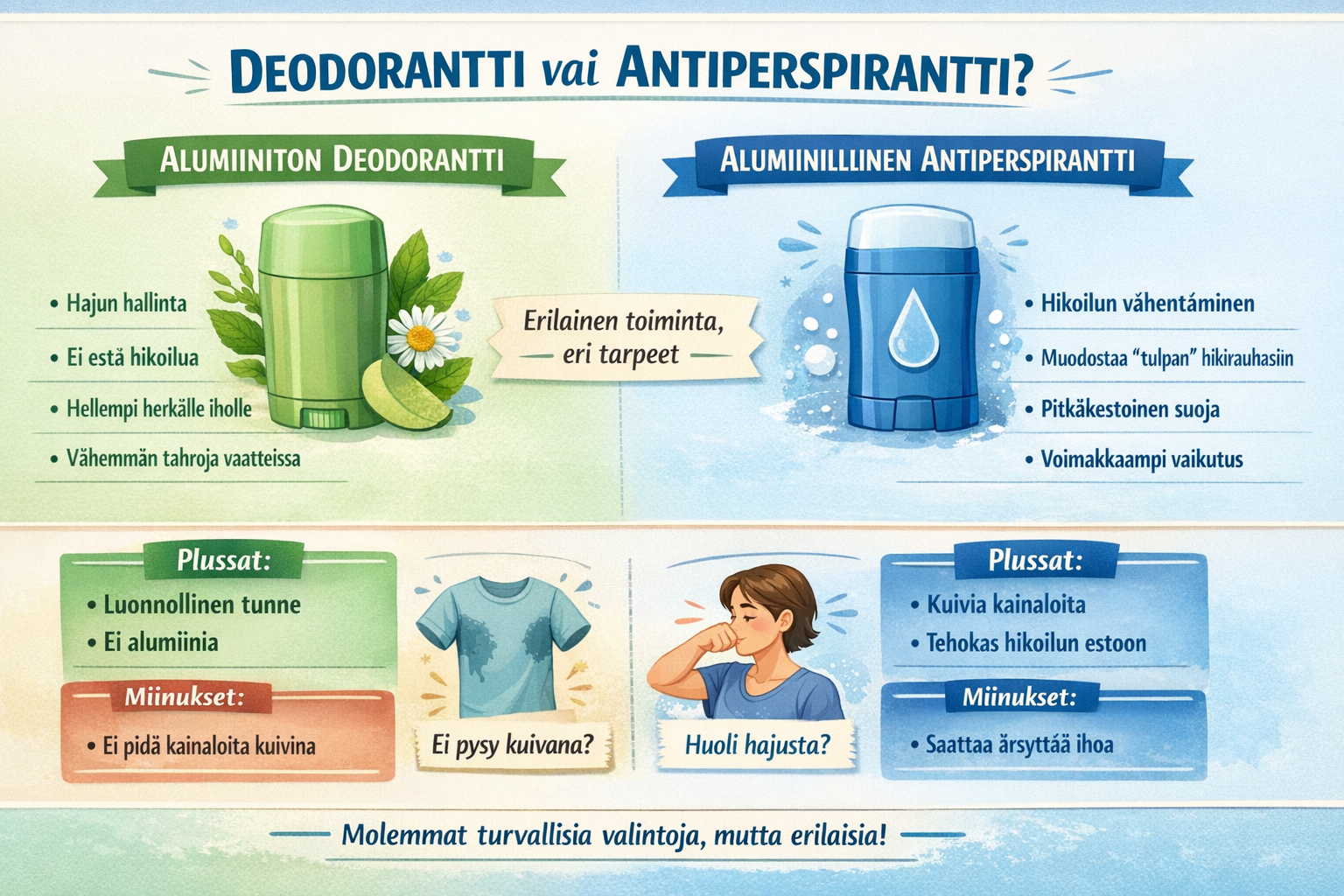
Aluminium-free deodorant appeals to many because it feels like a simple choice: less of a “blocked” feeling, often a shorter ingredient list, and the idea that sweating can function normally. At the same time, expectations can clash if you expect the same thing from a deodorant as from an antiperspirant: dryness.
Neither choice is right or wrong. For many people, an aluminium-containing antiperspirant is a perfectly suitable option that has been assessed as safe. An aluminium-free deodorant, on the other hand, can make everyday life easier if the most important thing is odour control and a pleasant feel on the skin, rather than preventing sweating.
Deodorant and antiperspirant are not the same thing
The active ingredients in antiperspirants are aluminium salts (e.g. aluminum chlorohydrate or aluminum zirconium compounds). They react with moisture and form a temporary “plug” in the sweat duct, reducing perspiration.
An aluminium-free deodorant does not try to prevent sweating. Its purpose is to reduce odour either by limiting odour-producing bacteria or by binding moisture and odours, sometimes also with fragrance. This difference explains most user experiences: a good deodorant can work exceptionally well, while your underarms may still be moist.
One practical consequence is this: if you need to stay dry, for example in workwear, a suit or while performing, an aluminium-free product may feel “weaker” even if odour control is adequate.
Who is aluminium-free deodorant particularly suitable for?
Sensitive skin is the most common reason for switching. Underarm skin is already put under strain by friction, hair removal and tight clothing. When deodorant ingredients are added, some people experience redness, stinging or itching.
Many dermatologists point out that several common deodorant ingredients can cause irritation, including aluminium salts, alcohol and fragrances. Being aluminium-free alone does not guarantee suitability, but it removes one potential irritant from the list.
The following groups often benefit the most from aluminium-free products:
- Sensitive or atopic skin: less stinging when you also choose a fragrance-free and alcohol-free option.
- Allergy-prone individuals: some people develop contact dermatitis from fragrances or certain preservatives, in which case a “milder” formula may work better.
- Active people: sweating can continue to cool the body, while odour stays better under control when bacterial growth is limited.
- Young people: a gentle basic product can be a good starting point for puberty-related odours.
- Older people: thinner, drier skin often tolerates products that do not feel “drying” better.
- Severe kidney disease: for some, this is a clear reason to avoid aluminium exposure in consultation with a doctor.
Pregnancy and breastfeeding often come up in discussions. No specific evidence has been found that aluminium-containing antiperspirants are harmful during pregnancy, but many choose aluminium-free products for peace of mind and because the skin can become more sensitive. It is an understandable, practical choice.
What benefits of aluminium-free deodorant do you notice in everyday life?
Many describe aluminium-free deodorants as feeling “lighter”. This may be because they do not try to alter the function of sweat glands, instead focusing on odour control. Some also find that their underarm skin calms down if their previous product caused irritation.
Practical benefits often mentioned include:
- Fewer white streaks
- Fewer yellow underarm stains on light-coloured shirts
- A more pleasant skin feel after hair removal
- A fragrance profile that is not “perfumey”
However, not everyone loves them immediately. Baking soda and essential oils used in natural cosmetics can be the factor that causes redness for some people. That is why “aluminium-free” should always be considered alongside other features: fragrance-free, baking soda-free, alcohol-free, and suitability for sensitive skin.
Effectiveness and expectations: distinguish between odour and wetness
Sweat itself is almost odourless. Odour develops when skin bacteria break down compounds in sweat and sebum. This is why many people are surprised: an aluminium-free deodorant can control odour well even if the underarm feels moist.
If sweating is heavy (or hyperhidrosis has been diagnosed), an aluminium-free deodorant will not usually meet the same need as a strong antiperspirant or pharmacy treatment products. A compromise may work then: aluminium-free for everyday use, and an antiperspirant for situations where dryness is needed.
|
Feature |
Aluminium-free deodorant |
Aluminium-containing antiperspirant |
|---|---|---|
|
Purpose |
Odour control |
Reducing sweating and controlling odour |
|
Effect on sweat glands |
Does not block sweat glands |
Forms a temporary “plug” in the sweat duct |
|
Skin irritation |
Depends on the formula; often gentler, but baking soda and essential oils may irritate |
Works well for some; for others it stings or dries the skin |
|
Stains on clothing |
Often less yellowing |
White marks and yellowing may occur |
|
Need to reapply during the day |
More common, especially in hot weather or during exercise |
Less common if the product is effective and suitable |
Ingredients worth learning to recognise
“Aluminum-free” on the product packaging tells you one thing, but other aspects are often more decisive for your underarms. Fragrances, alcohol and strong neutralising agents are among the most common reasons why a product does not feel right for you.
When reading an INCI list, these often stand out:
- Magnesium hydroxide: limits odour by affecting bacterial activity and is well tolerated by many.
- Zinc compounds (e.g. zinc ricinoleate): bind odours and are often used in fragrance-free products.
- Triethyl citrate: an ingredient that reduces odour formation and is suitable for many people with sensitive skin.
- Sodium bicarbonate (baking soda): an effective odour neutraliser, but may irritate sensitive skin at high concentrations.
- Essential oils and fragrance blends: the scent may be lovely, or it may be what causes a reaction.
- Alcohol denat: dries the skin and may sting immediately after shaving.
If your underarms are irritated, the easiest test is simple: switch to a fragrance-free, baking soda-free product for 2–3 weeks and see whether the skin calms down. If symptoms continue, the cause may be something other than deodorant, in which case a healthcare assessment is sensible.
Switching to aluminium-free: a short adjustment period is common
Some people talk about “detox”, but in practice it is often about the skin and the microbial balance of the underarms finding a new normal when sweating is no longer restricted. The first few days may feel wetter, and odour may appear earlier in the day.
An effective routine is surprisingly ordinary: clean, dry skin, a thin layer of product, and reapplication during the day if needed. It is also worth allowing the underarms time to recover after hair removal before applying the product if stinging occurs.
If the product feels sticky, you are often using too much. An aluminium-free deodorant may not “dry” in the same way as an antiperspirant, so a thin layer is best for many people.
When sweating is heavy: what can you do without aluminium?
If your goal is to stay fresh during exercise or throughout the working day, an aluminium-free product may still be enough when you choose the right one. There are significant differences between formulas: some are more caring, while others are clearly designed to combat odour.
Practical tips also include choosing shirt materials carefully and following a good laundry routine. Synthetic fibres can retain odour more strongly than cotton or technical sports fabrics designed to wick away moisture. If underarm odour becomes trapped in shirts, changing deodorant alone does not always help; the washing programme and detergent effectiveness also matter.
A one-sentence reminder: deodorant works best on clean skin, not as a cover-up product over old odour.
Environmental perspective: where does it really come from?
Being aluminium-free is often associated with the environment, but the impact is not simply “aluminium or no aluminium”. Packaging and how the product is made also matter greatly: plastic, recyclability, refill packs and transport.
Aluminium production is energy-intensive, which is why some people also want to avoid aluminium salts in cosmetics. On the other hand, many aluminium-free deodorants come in plastic tubes or jars, so it is worth considering the whole picture. If the environment is your top criterion, the most sensible choice is generally a product with as little packaging material as possible, clear recycling guidance, and one that suits you so you do not need to buy several products through trial and error.
How do you know whether a product suits your skin?
The underarm is a tricky area: it is warm, moist and prone to chafing. That is why a “good” deodorant is often a combination of effectiveness and tolerability, not maximum effectiveness at any cost.
A practical checklist is short: do you need dryness or is odour control enough, is your skin sensitive, do you want fragrance or a fragrance-free option, and does baking soda irritate you? Once you know these things, it is much easier to choose a suitable product from the shelf.
In Finland, aluminium-free options are available from many online shops, including those whose ranges also include everyday hygiene products and clear delivery and return policies. For example, in Finnish online shops like Finnmart.eu, deodorants fit naturally into the same basket as home textiles and other everyday products, reducing the need to order “individual jars” separately.
Frequently asked questions about aluminium-free deodorant
Can aluminium-free deodorant eliminate body odour completely? It often reduces odour significantly when the formula suits your skin. A completely “odour-free” result throughout the day is easier to achieve with an antiperspirant, as dryness reduces bacterial growth.
Is aluminium-containing deodorant dangerous? Extensive assessments have found no clear evidence that the aluminium salts in antiperspirants cause health harm in normal use. Still, some choose aluminium-free products because of personal preference, their skin or the precautionary principle.
Why does aluminium-free deodorant sometimes “let me down” in the afternoon? Because it does not reduce sweating. As moisture increases, conditions become more favourable for bacteria and odour may develop more quickly unless the formula is effective enough or it is reapplied when needed.
What should I do if my underarms become red? Take a break from the product, allow the skin to calm down, and next try a fragrance-free, baking soda-free option. If the skin breaks, itching is severe or symptoms recur with several products, a healthcare assessment can help identify the cause.
