What Is the Danish Flag Called?
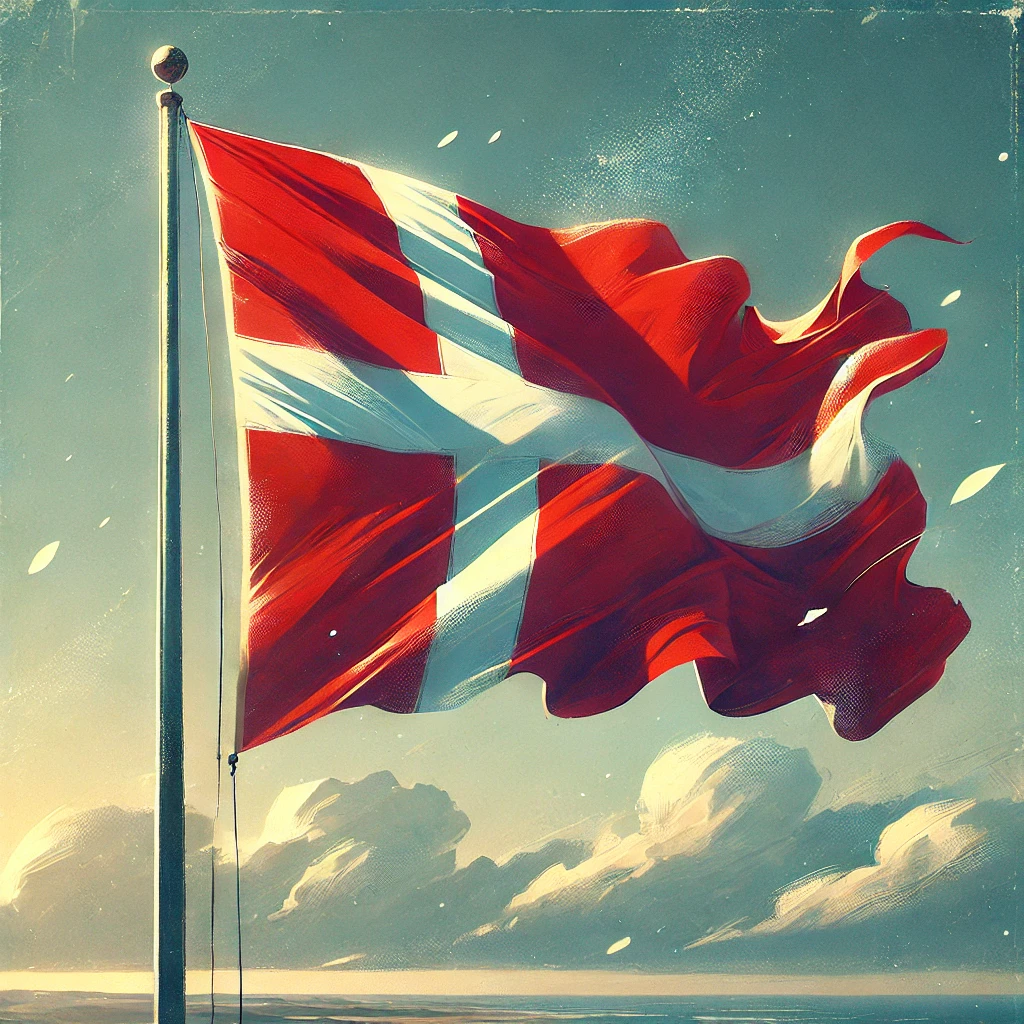
The Danish Flag – Dannebrog: The World's Oldest National Flag
The Danish flag is known as Dannebrog. It is one of the world's most recognisable flags and has a long, rich history. Dannebrog is much more than just a national symbol – it is believed to be the world's oldest national flag still in use, and it is associated with many legends and historical meanings. In this post, we look at Dannebrog, its history, and its symbolism.
Dannebrog – a flag with a story
The name of the Danish flag, Dannebrog, means “Danish cloth” or “the power of the Danes” in Finnish. The appearance of the flag is simple yet striking: it consists of a red background and a white cross extending from edge to edge. This white cross symbolises Christianity, which can also be seen in the flags of several other Nordic countries, such as Sweden and Norway.
The history of Dannebrog stretches back to the Middle Ages. According to legend, the flag fell from the sky to aid Denmark's King Valdemar II and his army in 1219, as they fought against the Estonians in the Battle of Lyndanisse. It is said that the flag falling from the sky gave the Danish forces renewed courage and a victorious outcome in the battle. Although the historical accuracy of this story cannot be proven, it is an important part of Danish identity and national pride.
Dannebrog Today
In Denmark, Dannebrog is a central part of national identity, and its role can be seen in many everyday and celebratory occasions. Danes use the flag both as a national symbol and as an expression of everyday joy – Dannebrog can be seen at birthdays, weddings, funerals, and other festive events. Flying the flag is a common way to celebrate special days, such as Denmark's National Day on 15 June, when the legend of Dannebrog is honoured.
The Danish flag also has strict rules of use. For example, the flag may not be left flying after sunset unless it is specifically illuminated, and it must always be in good condition and clean. Danes treat Dannebrog with great respect, and it is one of the country's most important national symbols.
How Does Dannebrog Differ from Other Nordic Flags?
Dannebrog is the predecessor of all Nordic flags. The white cross on a red background has also inspired other Nordic countries, which have adapted this design to their own colours: Sweden's blue and yellow, Norway's blue, red, and white, and Iceland's blue, red, and white flag are united by the same Scandinavian cross design.
Dannebrog differs from other Nordic flags particularly in its age and simple colour scheme. Although the flags of other Nordic countries are also important symbols in their respective countries, Dannebrog has an especially significant historical position and meaning.
Finally
The Danish flag, Dannebrog, is much more than simply a red-and-white piece of fabric – it is an important part of Denmark's history, culture, and identity. Dannebrog symbolises unity and pride for Danes, and its legendary history remains strong in the nation's memory. Dannebrog is not only Denmark's national symbol, but also the world's oldest national flag, whose significance has remained alive for centuries.
