Bathrobe guide: terry, velour or satin – how to choose the right one
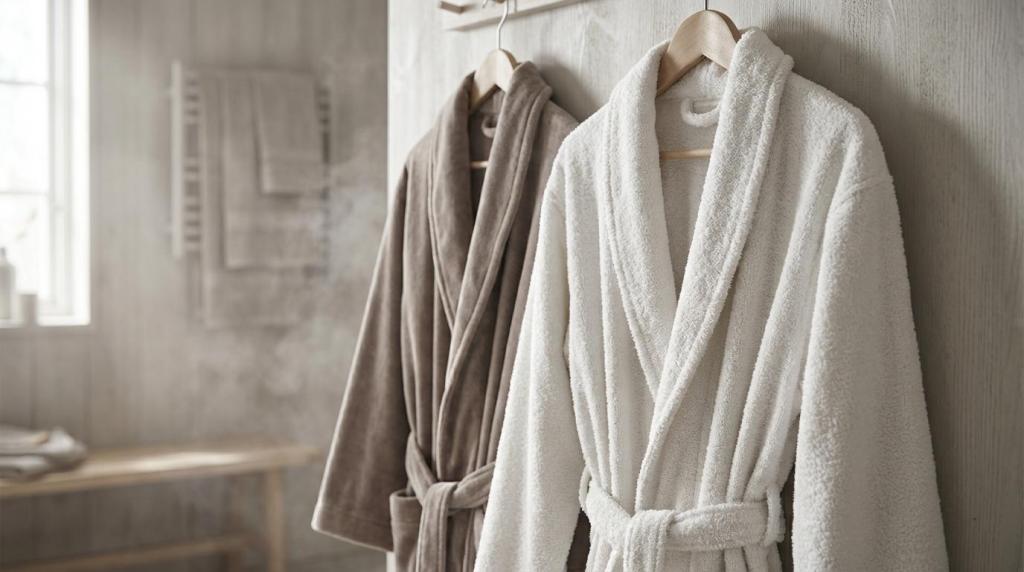
A bathrobe is one of those everyday textiles whose practicality only becomes apparent in use. The right material makes you feel warm, dry and relaxed. The wrong material, on the other hand, stays in the wardrobe because it feels clammy, too hot or simply unsuitable for the moment it was bought for.
When choosing between terry cloth, velour and satin, appearance alone is usually not decisive. What matters is what you actually expect from a bathrobe: drying, warmth, lightness or a more "dressed-up" feel.
Start with how you will use it, then choose the material
Many people choose a bathrobe based on size or colour, even though the most important question is how it will be used. Will you put it on straight after a shower, use it in the sauna, or is it intended for mornings, remote-working days or hotel-style travel?
Once the situation is clear, the material also begins to feel like a logical choice. The same bathrobe rarely does everything perfectly, so sometimes the most sensible solution is to own two different ones: one "dryer" and one loungewear garment.
Materials side by side at a glance
The comparison below helps illustrate the differences. It is particularly worth remembering that satin is a weave, not a single fibre: satin can be made from silk or polyester, and their feel and care differ from one another.
|
Feature |
Terry cloth |
Velour |
Satin (silk / polyester) |
|---|---|---|---|
|
Feel against the skin |
Plush, somewhat towel-like |
Velvety, soft and smooth |
Slippery, cool and glossy |
|
Absorbency |
Very good |
Moderate, often lower than terry cloth |
Poor (usually) |
|
Warmth |
Warm, varies according to thickness |
Very warm, often heavier |
Lightweight, provides little warmth |
|
Best use |
After a shower, bath or swim |
Lounging after the sauna, mornings and evenings |
As a dressing gown, for summer, for a polished look |
|
Care |
Withstands machine washing; fluffing is important |
Often wears well; the pile/surface requires attention |
Silk is delicate, polyester is easier to care for |
|
Appearance |
Relaxed, spa-inspired |
"Hotel-like" and softly luxurious |
Elegant, polished |
Terry cloth: when you want to get dry and stay warm
Terry cloth is the "real bathrobe" for many people. For good reason: its looped structure absorbs water efficiently and makes the robe as practical as a towel. If you put on a bathrobe over wet skin after a shower, terry cloth is generally the easiest and most practical choice.
However, terry cloth does not come in just one quality. Thickness, cotton quality and finishing make a big difference. Some terry fabrics are lightweight and quick-drying, while others are thick and truly warm.
One helpful sentence: terry cloth is a bathrobe for when a towel feels too small.
In everyday life, the benefits of terry cloth are also apparent in its care, as it generally withstands repeated washing. If your family showers, exercises, swims or uses the sauna often, terry cloth is often the robe that is in constant use.
Velour: soft lounging, less drying
A velour bathrobe looks more luxurious than terry cloth to many people because its surface is cut and velvety. It feels exceptionally soft and "finished" against the skin. Velour is well suited to moments when the skin is already fairly dry and the robe is worn for warmth or as comfortable loungewear.
Velour's weakness is often the same as its strength: its dense, smooth surface does not absorb water as effectively as the loops of terry cloth. If you get out of the bath or shower hoping the robe will take care of drying, velour may feel slow.
Velour is often a blended material (cotton and polyester). This offers practical benefits, such as shape retention and easy care, but it may feel warmer and less breathable to some people than pure cotton. Those with sensitive skin should pay attention to how the surface feels when sweating and in warm indoor air.
Satin: lightweight, cool and polished
A satin bathrobe is a different category from terry cloth and velour. It is generally not a "bathrobe for drying", but rather a dressing gown: lightweight, slippery and often beautifully draped. Satin is a summer choice for many, and it also works in situations where a lightweight garment is wanted for applying make-up, styling hair or sitting at the breakfast table.
Silk satin generally breathes better than polyester satin and, as a natural fibre, feels pleasant on many people's skin, but it typically requires gentler care. Polyester satin, in turn, often withstands everyday life more easily, although it may feel less breathable and build up static in dry indoor air.
Satin is at its best when you do not need absorbency.
Questions that make the choice easier
When the three materials still seem alike, the decision is often found through a few practical questions. Take a moment to consider your everyday life and answer honestly what you need the bathrobe for.
You can make the choice easier like this:
- At what point during washing do you use the robe? straight on wet skin or only after drying off
- Is warmth or coolness more important?
- How often do you wash the bathrobe? weekly or occasionally
- Will it mainly be used for the sauna? after the sauna, many people want a breathable, easy-to-put-on and quick-drying option
- Do you prefer a thick or lightweight feel?
If your answers are "straight after a shower" and "I want to get dry", terry cloth is often the top choice. If you instead want soft lounging and warmth, velour feels right to many. If lightweight comfort and beautiful drape matter most, satin is the clear choice.
Care and durability: the material shows in the laundry basket
The lifespan of a bathrobe depends surprisingly much on washing habits. A high-quality robe lasts a long time when washed correctly and dried in a way that suits the material.
Repeated washing is part of life with terry cloth and velour. After washing, terry cloth often benefits from light tumble drying or shaking so the loops do not become flattened. With velour, the surface can become compressed over time, so it is worth turning it inside out for washing and avoiding unnecessary friction.
With satin, the fibre is essential. Silk usually requires gentle handling, mild detergent and careful drying. Polyester satin is lower-maintenance, but its sheen and surface may suffer if temperatures are high and tumble drying is continuous.
When comparing products, always check the care instructions and consider whether they suit your everyday life. If you have plenty of laundry, easy care is a genuine benefit.
Skin-friendliness and safety: what to look for in the product description
A bathrobe is in prolonged direct contact with the skin. That is why it is worth checking at least the material and any certifications. For many people, an OEKO-TEX label is an easy way to ensure that the textile meets certain requirements related to chemical safety.
For sensitive skin, cotton is often a reliable choice, and terry cloth is then a natural option. On the other hand, some find the velvety surface of velour more pleasant because it feels less "towel-like". With satin, the slippery surface can be wonderful or irritating, depending on whether you like a cool feel and how the material behaves against the skin when sweating.
Fit is also related to comfort: a bathrobe that is too tight can easily chafe at the neck and underarms, while one that is too large may feel heavy.
Practical details that change the experience
The material is the most important factor, but the construction of a bathrobe determines whether it feels right for everyday use or "always wrong".
A hood is a good example. In terry cloth, a hood can be excellent for hair and warmth, but it adds drying time. In satin, a hood is often more of a style choice. In velour, a hood makes the robe especially warm.
Pockets, belt loops and the shape of the collar have a surprisingly large effect on wearing comfort. The same applies to length: a long robe provides more warmth, while a shorter one is more agile and generally dries faster.
A good rule of thumb is to apply the intended use:
- After swimming and showering: generous sizing and a proper belt
- After the sauna: easy to put on, not too tight around the collar
- Mornings and evenings: comfortable pockets and a soft inner surface
How to choose online without trying it on
When you cannot try on a bathrobe, product information and return terms become especially valuable. In a reliable online store, materials, composition and care instructions are clearly stated, and a size chart helps prevent unnecessary returns.
It is also worth checking practical services that are useful specifically for textiles: delivery reliability, insured transport, a flexible right of return and accessible customer service. Many people also appreciate being able to get help quickly and easily, for example by message.
When there are many options in the range, a little advance planning keeps shopping straightforward. You can do this with a simple checklist:
- Use situation: shower, sauna, lounging, travel
- Material and composition: cotton, blend, silk or polyester
- Care instructions: can it handle your everyday washing routine
- Certifications: for example, OEKO-TEX, if this is important to you
- Return period: flexible enough for you to properly try it at home
When two bathrobes are better than one
If there is a lot of sauna use at home and people shower often, one robe may constantly be in the wash or damp. In that case, having two robes reduces everyday hassle.
A well-functioning pair is often terry cloth and velour: terry cloth handles drying, while velour serves as warm loungewear. For summer-focused use, the pair can be terry cloth and satin: terry cloth for washing, satin for lightweight morning moments.
The choice is not only about "what feels nice in the shop", but "what feels right on a busy Tuesday when you just want to relax for a moment".
